Fence Installation in Chicago, IL — Free On-Site Estimate
Chicago Fence Builders Team provides Fence Installation in Chicago, IL for homeowners, two-flat owners and commercial property managers, with 15+ years installing residential and commercial fences across Chicago and the surrounding Chicagoland area. Every estimate is a free on-site visit where the fence line is measured, not a phone-only quote. Request the free on-site estimate or call (773) 312-3051, Monday–Saturday, 9 AM–4 PM.
How We Match the Right Fence Material to a Chicago Property
The material family is decided by the physical condition of the fence line and the lot, not by a photo. Fence installation in Chicago starts with how much room the side yard actually gives you, how the line meets a brick or greystone frontage, where the gate has to open, and what the fence is expected to do once it is standing.
A fence picked from a picture usually looks right and fits wrong. On a narrow residential lot, or along a brick or greystone facade, the material has to answer to the line it sits on — the gangway, the alley side, the corner where the run turns — and that fit is only confirmed by looking at the property itself.
In practice, fence material selection in Chicago, IL is a measurement problem before it is a style problem, and the order below is how we work through it.
The aim is to shorten the decision to something you can defend: a family that fits the line, a finish that suits the facade, and a gate position that still works in February. From there, an estimate describes real work instead of a guess.
Three Checks Before We Recommend a Family
Every recommendation runs through the same three checks, in the same order, before any product is named.
01Read the lot and the frontage
We look at the usable width of the side yard, how the fence line meets a brick or greystone facade, where the gangway and alley access run, and how a gate would swing without crowding the walk. This check decides whether a solid privacy panel is realistic or whether the line needs a slimmer profile.
02Define the job on that specific line
Privacy between two-flats, containment for a dog or a pool, screening for a service area, or a clean front line that reads well from the street. The job sets the height, the opacity and whether the fence carries weight or simply defines an edge. The same reading applies to commercial fencing in Chicago, IL, where the line often has to separate a yard from a lot while keeping entry where the operation needs it.
03Recommend the family, then confirm the finish
Wood, vinyl or metal first; color, profile, post spacing and gate hardware after. No material is committed until the finish and the layout are agreed, so the estimate you receive describes one family, not a menu of everything available.
Property Conditions That Change the Recommendation
A narrow side yard with a gangway: profile and depth matter more than pattern.
A corner lot with two visible faces: the street side often needs a different finish from the alley side.
A pool or a dog run: containment sets the height and the gate hardware before appearance does.
A commercial yard or parking edge: the line has to separate areas while keeping a controlled entry open.
Property first, product second. That order is what the True Build-Quality Standard™ means in daily practice: the lot and the line set the shortlist, and the shortlist is what you are shown.
Working with a fence contractor in Chicago who reads the lot before quoting is the difference between a fence that fits and one that gets adjusted later. It also keeps the estimate conversation short, because the options have already been narrowed to the two or three that genuinely suit the property.
The Six Material Families, and Why the Photo Comes Last
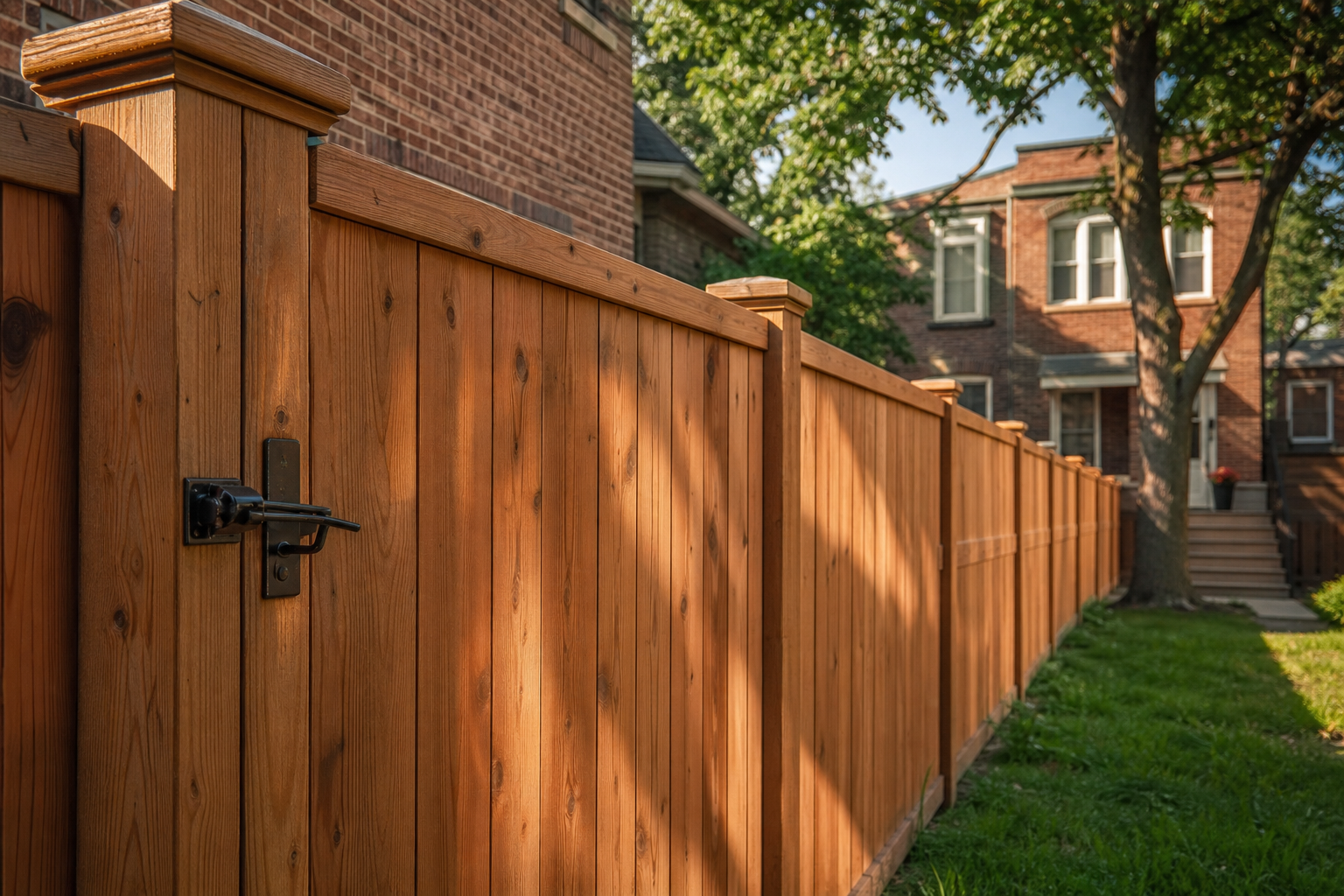
Wood Privacy
Vinyl
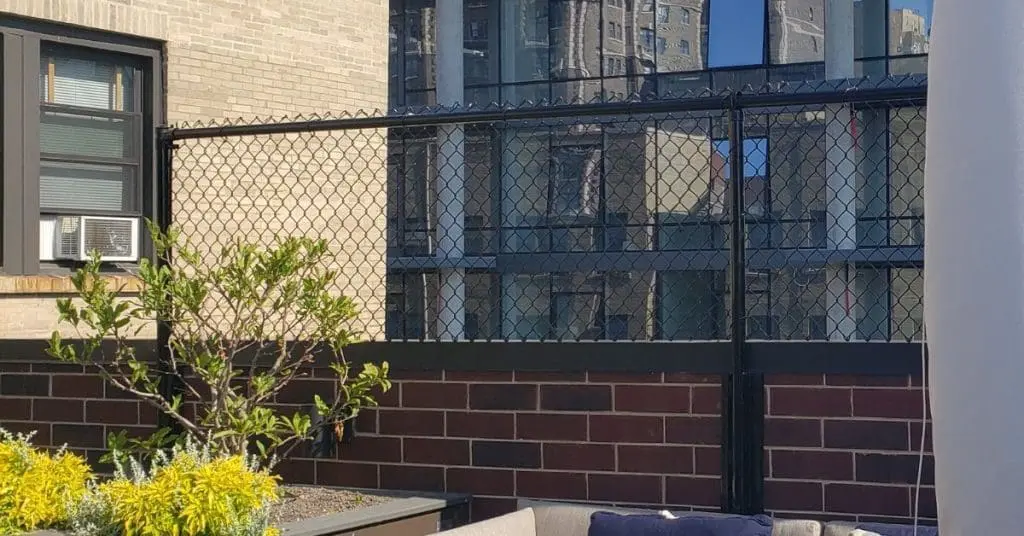
Chain Link
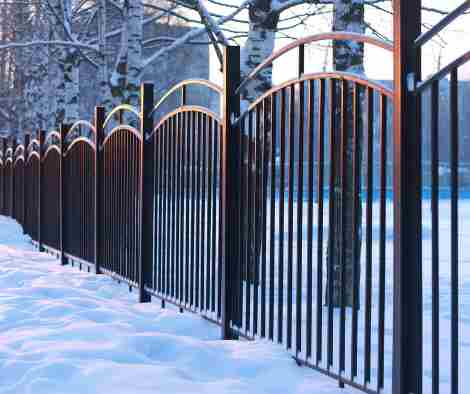
Wrought Iron
Aluminum
Steel
This row is a reference, not a recommendation. It shows the families we install — wood, vinyl, chain link, wrought iron, aluminum and steel — so you can recognise what a neighbour's fence is made of when you walk the block. Which one belongs on your line is answered on the property, not in a gallery.
What to Send Before We Recommend a Material
A phone photo of the full line helps — the corner, the gate opening, the alley side — but the details that move a quote forward are simple. Whether the project is a backyard privacy run or a commercial perimeter, every fence installation in Chicago we price starts with the same three checks. Send those details and we can name the family that fits and describe what the estimate covers.
Property type: single-family home, two-flat, multi-unit building or commercial yard
Frontage and fence line: brick, greystone, frame, or an open lot edge
Approximate linear footage, gate count and access-control needs
The job: privacy, containment, screening, security or a cleaner front line
Fence Installation Pricing and Consultation Options in Chicago, IL
A fence installation cost in Chicago is not pulled from a published rate per foot. It comes from a measured walk of your line: material, height, gate count, slope and access all move the total, so a figure quoted before anyone has seen the property is a guess rather than an estimate. The visit itself costs nothing, and it is the step that turns a rough idea into a real scope.
What Moves the Price of a Fence Project
Fence installation in Chicago is priced from a measured line, not from a rate card. Two lots on the same block can land in very different places, and the items below are the ones we confirm on site instead of assuming from a photo or a phone description.
Measured linear footage
The true run of fence, including short returns to the house and the section a gate interrupts, is measured rather than estimated.
Height and style
A taller panel, tighter picket spacing or a decorative top rail adds material and labor, so the layout is confirmed before it is priced.
Material and hardware
The panel, posts, rails, fasteners and finish grade you select set the base of the estimate and the upkeep you take on later.
Gates and access points
A single walk gate prices differently from a double drive gate with an opener or keypad, and each opening is quoted as its own item.
Ground and slope conditions
Grade changes, buried roots, old concrete footings and soil that shifts through freeze-thaw all affect how posts are set and how deep they go.
Removal and disposal
If an existing fence has to come out, tear-out, hauling and disposal are quoted as their own line rather than folded into the total.
What a Written Estimate Should Show You
A useful estimate is specific enough to compare against another bid. When two quotes look far apart, it is usually because one of them left something out.
The measured fence line and total footage
Fence type, height and finish
Posts, panels, rails, hardware and fasteners included
Gate type, swing direction and any access control
What is not included, such as irrigation or landscaping repair
Site conditions noted during the walk-through
Ask for that scope in writing. It is the fastest way to tell whether two bids are actually quoting the same job.
Wood and Vinyl Fence Installation in Chicago, IL: Privacy, Maintenance and Winter Performance
Fence Installation in Chicago rarely comes down to taste alone. A wide backyard behind a single-family home favors a Wood Privacy Fence; a narrow, alley-facing run between two-flats and greystones usually favors a Vinyl Fence that will not absorb moisture, splinter or need staining. Narrow side yards settle the decision quickly: a few usable feet of width determine practical height, setback from a shared property line and how wide a gate can be.
Narrow Side Yards and Shared Property Lines
On residential fence installation in Chicago, IL between buildings, the margin is thin — posts, footings and gate swing compete for the same space. A wood privacy fence can be adapted panel by panel to odd corners and grade changes; vinyl arrives in fixed widths and works best on straight, predictable runs. Where a neighbor’s line sits steps from your wall, the honest answer is sometimes a shorter fence with tighter spacing rather than the tallest board the yard can carry.
Upkeep and Winter Movement on the Same Line
Upkeep separates the two materials most clearly. A wood privacy fence needs periodic sealing or staining, plus the occasional rail or picket replacement. A vinyl fence asks for little more than a rinse and holds its color without a stain can. Neither is maintenance-free. Both face freeze-thaw conditions on exposed, alley-facing runs, where expanding ground can nudge a post out of plumb and show up later as a sagging gate or hardware that no longer latches cleanly. Lake-effect wind adds sideways load to the same run, so bracing, post spacing and gate framing matter as much as the panel itself.
Chicago Fence Builders Team reads the line and recommends the material that fits it, applying the same reasoning to commercial fencing in Chicago, IL, where straight panels and low upkeep matter most. Send photos of your fence line, and the first question worth answering is how much upkeep you want to own each year.
Licensed, Bonded and Insured Fence Contractors Serving Chicago, IL
A licensed, bonded and insured contractor protects your property on three fronts: state licensing for the work itself, a surety bond if the agreement is not fulfilled, and active liability plus workers’ compensation coverage on site. In practice, that means a crew injury or damage to a shared line does not become the property owner’s bill — a detail that matters on tight Chicago lots where rear fences run along public alleys.
Before a post is set, the fence line is measured on site. That assessment confirms property-line positions, gate swing, grade, equipment access and the narrow side yards between two-flats and greystones, then becomes a written scope listing materials, hardware, exclusions and disposal. That has held for 15+ years installing residential and commercial fences across Chicago and the Chicagoland area, so wood fence installation in Chicago, IL and commercial fence installation in Chicago, IL follow the same credential-backed standard. The Chicago Fence Builders Team stays accountable from walk-through to final look-over.
What Each Credential Protects in Practice
Licensing — authorized for fence work and code-aware planning around City of Chicago height and placement rules, reviewed rather than promised.
Bonding — a documented path if the crew fails to complete the agreed scope or breaks contract terms.
Insurance — liability and workers’ coverage on site, so home or neighbor damage runs through a claim, not your savings.
Want these credentials behind your project? Request the on-site estimate through the contact page and share photos of the fence line, gate locations and any shared-line concerns.
IRON FENCE INSTALLATION IN CHICAGO, IL
Goal-First Fence Material Selection for Chicago Homes and Businesses
Fence material in Chicago is selected from the project goal — privacy, containment, security or curb appeal — before style gets a vote. That goal-first thinking is where good fence installation in Chicago planning starts: with what the property has to do, not with what looks best on a showroom floor.
Backyard privacy usually points to a Wood Privacy Fence for full-height screening, while a Vinyl Fence answers the same goal where low upkeep and a uniform, easy-clean face matter more than grain. Where the goal is containment along a rear lot that still needs sightlines, Chain Link Fence does the work, and Steel Fencing carries heavier perimeter and gate loads on commercial sides. Street-facing elevations flip the priority: a Wrought Iron Fence or Aluminum Fence keeps sightlines open and reads as finished front-yard detail.
Chicago lot conditions decide the rest. Narrow side yards between two-flats and greystones make height and setback the real constraint rather than length, and shared property lines mean the fence has to land cleanly on a boundary two owners look at. Alley-facing garages and gates change where a drive gate can swing, which is why security fencing in Chicago, IL and residential fencing in Chicago, IL rarely follow the same layout — a dense block and a commercial perimeter can sit a few miles apart in the same city.
That is also why the recommendation gets confirmed on site, not over the phone: the person who measures your fence line, height, slope and gate placement is the person accountable for the build, which is exactly what an independent, locally-rooted contractor brings to the choice. Request a free on-site estimate at chicagofencebuilders.com/contact, and your goal and fence line get reviewed together before anything is ordered.
Request a Free On-Site Fence Estimate in Chicago, IL
A free fence estimate in Chicago is an on-site visit: we come to your property, measure the fence line and review gates and access before any numbers are discussed. That walk-through is what keeps a Fence Installation in Chicago scope realistic, because alley-facing runs, narrow side yards and gate placement all change the plan.
After you send your request, the sequence stays short: we confirm the details, schedule a visit window within Monday–Saturday, 9 AM – 4 PM, and the crew arrives at the property to measure. To shorten the visit, have your property type, approximate fence line length, gate needs and photos or your nearest cross street ready.
Fence Installation in Chicago, IL: Frequently Asked Questions
Straight answers about fence installation in Chicago — cost drivers, timing, permits, repairs, removal, and access control — before you request a free estimate.
Fence Permits, Project Timelines and Maintenance in Chicago, IL
Fence Repair or New Fence Installation in Chicago, IL: How to Decide
Most repair-or-replace decisions begin with one visible failure: a post that has lifted, a gate that drags across the ground, or a run of boards that went soft through a freeze-thaw winter. The question worth answering is whether that failure is isolated, or whether the whole line has reached the end of its life.
Repair usually wins when the problem is local. A single heaved post, one gate that has dropped out of square, or a short stretch of rotted boards can often be corrected while the rest of the fence still has years ahead of it. Replacement becomes the better call when the damage repeats — when posts move in more than one place, when rot reaches past the surface into rails and post bases, or when the panels no longer hold a straight line.
Conditions That Still Favor a Repair
One problem area. If a single post has heaved or a lone gate sags, the rest of the line is telling you it is still structurally sound.
Surface-level wear. Graying, splintering or soft edges on boards that remain firmly fastened usually points to age, not structural failure.
Intact frame. When posts and rails are plumb and tight, new boards or a rebuilt gate restore the line without starting over.
Recent investment. If the fence was installed only a few seasons ago and one section failed, the frame is rarely the weak point.
Signs Your Fence Is Nearing Replacement
Several heaved posts. Movement in multiple spots after a hard winter usually means the footings, not the panels, have given out.
Rot at the base. Soft post bases, crumbling rails and boards that crumble instead of snapping cannot be patched reliably.
Drifting alignment. A line that leans or wanders along a rear alley or property edge rarely straightens out with spot repairs.
Repeat repairs. If you have patched the same run more than once in a few seasons, the fence is spending more time being fixed than being used.
Repair Versus Replacement Along Chicago Alleys and Lot Lines
Where the fence sits changes the answer. Lines tucked against a rear alley, a garage wall or a neighboring lot line are harder to rebuild piece by piece, so a partial repair that leaves mixed post heights and a slightly off line tends to be more obvious than the same repair on an open yard. On those runs, a consistent rebuild reads cleaner from the street and from the neighbor’s side.
On the other hand, a repair that keeps a sound frame in place leaves your layout, gate positions and plantings untouched. When the frame is still solid, that is the smaller disruption; when it is not, fence installation in Chicago, IL becomes the more sensible route, because the posts and footings are the parts that actually need replacing.
If you are still stuck between the two, walk the line before you collect quotes. Push each post to see whether it moves, open the gate and check whether its frame is still square, and sight down the run from one corner to the other. Those three checks separate a repair from a rebuild more often than anything else.
When the answer is still unclear, a hands-on look at the fence line settles it faster than photos. A fence company in Chicago, IL that inspects post movement, gate framing and overall alignment can tell you which sections are worth saving and which are not, turning a guess into a scoped project you can plan around.
Chain Link vs Steel vs Wrought Iron vs Aluminum Fencing in Chicago
Choosing among metal fence types for a Chicago property comes down to four practical questions: how much strength the perimeter needs, how much visibility you want to keep, how much upkeep you are willing to accept, and how the fence should look from the street. The comparison below focuses only on the metal options, so you can match a material to the specific job before scheduling a fence installation in Chicago, IL.
Chain Link: Perimeter Security With Full Sightlines
Chain link remains the workhorse of Chicago commercial yards and parking areas, and it also handles plenty of residential side yards where the goal is containment rather than privacy. Its strengths are low cost per linear foot, fast coverage of long runs, and near-total visibility, which matters when a facility manager needs to monitor equipment, vehicles or a loading area from the office.
Best for: warehouse perimeters, storage lots, school and park boundaries, dog runs, side-yard containment.
Strength: Moderate. Galvanized or vinyl-coated steel wire resists tension well but is the least rigid option against direct impact.
Maintenance: Low. Coated chain link holds up in Midwest freeze-thaw cycles with basic tension checks.
Look: Utilitarian. It defines a boundary without hiding anything.
Chain link also accepts the widest range of gate and access-control hardware, from simple double swing gates to keypad and card-reader entry — a real advantage when a commercial site needs controlled entry points.
Steel Fencing: The Heavy-Duty Choice for Commercial Perimeters
Steel fencing is what you select when security is the primary requirement and appearance is secondary. Welded steel panels, steel pickets and ornamental steel systems carry far more structural mass than chain link or aluminum, which makes them appropriate for industrial sites, utility enclosures, dumpster corrals and properties where repeated impact or attempted forced entry is a realistic concern.
Because steel is heavier, post spacing and footing depth matter more than with any other metal option. On Chicago residential lots and side yards, steel typically appears as a fortified driveway gate or a short security run rather than a full decorative front fence. Maintenance is moderate: powder-coated or painted steel needs periodic inspection for scratches and touch-ups, since exposed steel will corrode faster in a city that sees road salt and lake-effect moisture.
Wrought Iron: Character, Weight and Long-Term Value
Traditional wrought iron offers the heaviest, most substantial look of the four, with hand-forged or solid-bar construction, decorative detailing and a presence that reads as permanent. It is the natural fit for historic Chicago properties, front-yard enclosures, courtyard entries and commercial buildings where the fence is part of the architecture, not just a boundary.
Best for: front yards, courtyard and garden enclosures, landmark and vintage properties, entry gates.
Strength: Very high. Solid bars resist bending and are difficult to climb.
Visibility: Open, with an ornamental profile rather than a solid barrier.
Maintenance: Higher than other metals. Iron requires regular painting or re-coating to prevent rust.
Cost and weight are the trade-offs. Iron demands more labor, more skilled welding and heavier foundations, which is why many property owners weigh it against a lighter alternative when the visual style is the goal rather than maximum mass.
Aluminum: The Low-Maintenance Ornamental Option
Aluminum delivers much of the ornamental character of iron at a fraction of the weight, and it never rusts. Powder-coated aluminum resists chipping and fading, which makes it the most forgiving metal for Chicago weather over a long service life. For residential front yards, pool enclosures and side-yard gates, it is usually the most practical way to get a decorative metal look without an ongoing painting schedule.
Aluminum is not as rigid as steel or iron, so it is a poor choice where impact resistance is the priority. Where it excels is in projects that need a clean architectural line, low upkeep and a finish that stays consistent for years.
Which Metal Fits Which Chicago Property
For commercial properties, the decision usually follows function: chain link for wide, visible perimeters and controlled budgets, steel for perimeters that must resist force, and ornamental steel or iron where the fence faces customers or the public. For residential properties, the decision usually follows appearance and upkeep: aluminum for a decorative metal look with minimal maintenance, wrought iron when weight and permanence matter more than cost, and chain link where containment or a hidden side-yard boundary is the only real requirement.
Gate and access-control needs often settle the question. If a property requires automated entry, keypad access, or a wide vehicle opening, the material weight determines the operator, hinge and post reinforcement required — and that combination usually narrows the list quickly.
Getting A Clear Recommendation Before You Commit
Material comparisons only get you so far. Property lines, lot width, grade changes, alley access and the specific security or visibility goal all shift the answer, and a short conversation with a fence contractor in Chicago, IL is usually faster than guessing from photos. Request a site assessment and a fence company in Chicago, IL can confirm which metal actually fits the job, then outline the scope before any numbers are discussed.
If you are comparing options for a home, a rental property or a commercial yard, share the property type, approximate linear footage, gate requirements and how much visibility you want to keep. That information is enough to move from a general comparison to a specific recommendation, and you can start the conversation through the contact page.
Fence Installation Pricing and Consultation Options in Chicago, IL
Fence Installation in Chicago is priced from a measured on-site estimate, not a flat rate. Because every property has different dimensions, grade changes, and access points, a reliable quote starts with someone walking the fence line and taking real measurements. That is why we offer a free on-site estimate before any work is scheduled.
What Drives Your Fence Installation Quote
Several variables shape the final number. The biggest ones include total linear footage, the material you select, fence height, and the number and type of gates. Terrain also plays a role — a sloped yard or a tight urban lot can require more labor than a flat, open space. If an old fence needs to come out, removal and disposal add to the scope.
Linear footage — the total length of the fence line.
Material choice — wood, vinyl, chain link, wrought iron, aluminum, or steel have different price points.
Height and style — taller fences and custom designs use more material.
Gates and access points — each gate adds framing and installation time.
Terrain and access — slopes, limited access, and difficult equipment access increase labor.
Removal and disposal — taking out an old fence and hauling it away is a separate cost.
Because these factors vary so much, a quote built from a measured on-site estimate is the only way to give you a realistic number. A fence company in Chicago, IL should be able to explain each line of the scope before you commit.
Consultation Options Before You Commit
You can choose how you want to start. The standard path is a free on-site estimate where we measure the fence line, note terrain and access, and discuss material options. If you have photos or a rough sketch, we can also do a preliminary review by phone to narrow down choices. As a local fence contractor in Chicago, IL, we can walk you through the variables that affect your quote and answer layout or gate questions.
For larger or multi-phase projects, a pre-bid consultation can help align on staging, access, and expectations. Whether you are planning a new fence or a fence replacement in Chicago, IL, the goal is the same: a clear, scope-based price before work begins.
Chicago Fence Installation Results: From On-Site Measure to Final Walkthrough
Chicago Wrought Iron Fencing
Commercial Fence Installation in Chicago for Warehouses, Parking Lots and Storage Yards
A commercial fence installation in Chicago, IL is a perimeter-planning job before it is a material decision. Along the city’s industrial edges and mixed-use corridors, that means designing around rear-alley access for deliveries and equipment, keeping loading zones and dumpster pad clearance usable for trucks, and respecting shared property lines where one fence line serves two buildings. Business sites rarely offer the clean, open boundaries a product sheet assumes, so the lot decides the layout.
Property Lines, Gates and Access Come First
Every commercial job begins with a site visit that verifies property lines, gate locations and access before a single post, panel or gate is ordered. A fence company in Chicago, IL needs that walkthrough because truck approach, gate swing and alley clearance determine where openings actually land, and how a parking lot keeps working through the build while a storage yard stays secured at night.
Materials for Parking Lots and Storage Yards
Materials follow the use case rather than a catalog. Chain link and steel fencing fit storage yards, loading areas and service courts; wrought iron and aluminum fit street-facing edges and shared entrances. Facility and property managers usually weigh access control, truck routing and gate count, while multifamily, retail and school sites focus on separating public walkways from service zones and keeping sightlines clear.
Share the property type, approximate linear footage, gate count and any access constraints, and a perimeter walkthrough can be scheduled.
Fence Installation in Chicago: What the Local Data Shows
This page covers the fence installation service area Chicago homeowners, landlords and facility managers actually work in — dense residential blocks on the West and Southwest Sides, mixed-use corridors, and industrial edges along the river and rail lines. Chicago is the third-most populous city in the United States and the county seat of Cook County, and its housing stock — bungalows, two-flats, greystones and multi-unit buildings — shapes how a fence line gets laid out. The figures below come from public sources and explain why post depth, gate placement and material choice are planned differently here than in a suburban market.
Chicago at a Glance — Public Data Used for Project Planning
Indicator
Figure
Source
Total population
2,707,648
ACS 5-year 2023 estimate
Residents of Hispanic or Latino origin
29.6%
ACS 5-year 2023
Spanish spoken at home (age 5 and older)
23.8%
ACS 5-year 2023
Residents born outside the United States
20.7%
ACS 5-year 2023
Census figures are five-year estimates rather than exact counts. They are shown as background on how the city is laid out, not as a substitute for a measured walk of your property line.
Bungalow Belt Lots and Narrow Side Yards
Avondale, Portage Park, Belmont Cragin and similar blocks run on bungalows, two-flats and greystones with tight side yards. A wood privacy fence here is measured to the actual lot line and built panel by panel, because stock kit sizes rarely match a 25- or 30-foot Chicago yard.
Alleys, Gangways and Gate Placement
Chicago's alley grid and narrow gangways decide where a gate can swing and how a crew reaches the work area. Settling that before material is ordered keeps a chain link run or a wrought iron gate from blocking a service entrance, a garage approach or a neighbor's access.
Lakefront Weather, Wind and Freeze-Thaw
Wind off Lake Michigan, snow load and repeated freeze-thaw cycles are hard on fence lines. Post depth, concrete set and hardware are matched to that exposure so a vinyl or aluminum fence holds its line through winter instead of leaning by spring.
Homes and Commercial Property on the Same Blocks
Logan Square and West Town mix storefronts with residences, and Back of the Yards mixes housing with industrial property. Residential work is planned around privacy, pets and curb appeal; commercial perimeters such as warehouses, parking lots and storage yards are planned around access control, sightlines and steel or heavy-gauge runs.
Community areas we plan for: Pilsen and Little Village on the Southwest Side, Humboldt Park and Austin to the west, Logan Square, West Town and Avondale further north, plus Englewood and the Back of the Yards area on the South Side. Conditions change block by block — lot width, alley access, existing fence lines and setback questions differ from one address to the next, so an estimate is built from the property itself.
Planning starts on site. Share your property type, approximate linear footage, gate or access-control needs and any photos you already have, and an estimate visit can be scheduled around your address.