Comparing Wood and Vinyl for Privacy Screening, Pool Enclosures, and Pet-Safe Yards
A Westmont backyard usually has to do several jobs at once: screen a neighbor’s sightline, contain a dog, and keep a pool area separate from the rest of the lawn. Wood and vinyl both handle those jobs, but they behave differently over time. Planning fence installation in Westmont, IL is less about picking an objectively better material and more about matching panel style, height, and gate placement to the way the yard is actually used — which is why a fence contractor in Westmont, IL should walk the line with you before any material is ordered.
Wood Privacy Fence for Backyards, Pools, and Pets
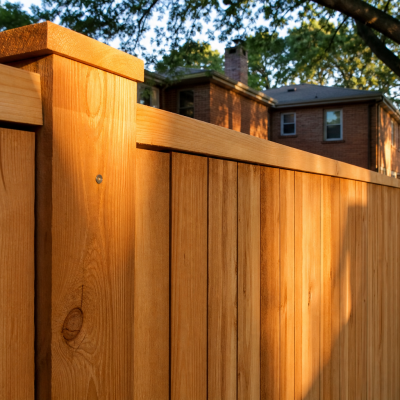
Wood fence installation in Westmont, IL most often uses cedar or treated pine. Board-on-board construction overlaps the pickets so there is no gap to see through, which is what matters when the goal is real screening from a two-story neighbor or a busy side street. A 6-foot panel is the typical privacy specification along a rear or side lot line, while a 4-foot section often defines a pool surround without closing in the whole yard.
Panel style is where wood has the most range: dog-eared pickets, flat-top panels, horizontal slats, lattice tops, and shadowbox patterns each read differently from the street and from inside the yard. For pets, a solid panel with a tight bottom rail reduces digging and visual chasing along the fence line. The trade-off is upkeep — wood wants an initial seal and periodic staining, and untreated boards gray and check as they move through the freeze-thaw cycles this region sees every year.
Vinyl Fence: Color, Cleanup, and Pool-Side Performance
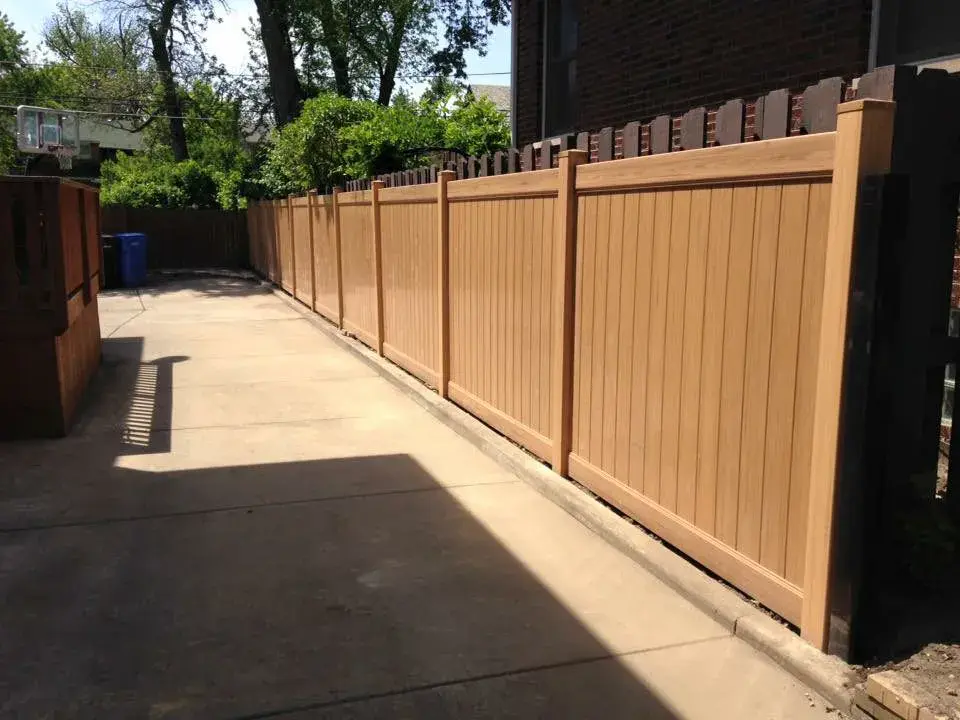
Vinyl fencing arrives as continuous panels with tongue-and-groove or privacy-picket profiles, so there are no fasteners backing out and no individual boards to replace. It does not rot, splinter, or need repainting, and a hose handles most cleaning. Colors are factory-finished and consistent, which helps when the new fence has to line up with an existing gate, a pool enclosure, or trim already on the house. Because there are no splinters and no exposed staples, vinyl is a common pick around pools and for dogs that lean against the fence line.
The limits are worth knowing up front. Vinyl expands and contracts with temperature, so panels are set with the manufacturer’s gap tolerances. Impact is the other variable — a vinyl panel can crack where wood would only dent, which matters close to a driveway or a heavily used gate.
Panel Height, Style, and Gate Placement
Both materials cover the same range of jobs: a 4-foot section for a front border or a pool area, 5-foot for mixed screening, and 6-foot where full privacy is the point. Solid panels block the most view; shadowbox and semi-private patterns keep air moving and look more finished from the neighbor’s side of the line.
Gate placement usually decides how a fence feels day to day. A pool gate works best where it stays visible from the house and clear of a heat pump, downspout, or planting bed. For a pet yard, a gate at the corner of the driveway swings more easily than one mid-span, and a wider double gate pays off if a mower, trailer, or delivery ever needs to come through. Where a gate will open dozens of times a day, a metal frame and adjustable hinges hold alignment better than a wood frame that swells with moisture.
Footings and Freeze-Thaw: What Keeps Posts Straight
Posts in this part of Illinois go through repeated freezing and thawing every winter, which is why footing depth often matters more than fence height. Posts set in concrete below the frost line keep the line plumb, and a concrete collar at grade helps water shed away from the post instead of pooling at its base. Wood and vinyl handle this the same way, with one difference: wood tolerates a small shift, while a vinyl post depends on the footing being right the first time.
Which Material Fits Your Westmont Yard
Wood tends to win when the goal is a specific look — privacy that matches a deck, garden, or mature tree line — or when a long run has to come in at a lower material cost and re-staining is acceptable as routine work. Vinyl tends to win around a pool, along a line that takes heavy sun, and in yards where the homeowner would rather not think about re-sealing every couple of years. A fence company in Westmont, IL that installs both can bring full-size panel samples out to the yard, so the comparison happens against your actual fence line instead of a brochure. Either way, the fence should be repairable in sections rather than replaced whole, and the gate should match the panel.
Chicago Fence Builders installs both materials on Westmont residential lots and pool enclosures, and a site walk is the fastest way to settle the comparison. We check the soil, the grade, the gate landing, and exactly where the fence needs to block sight — then quote the job before anything is ordered. Call (773) 312-3051 or request a fence quote to schedule the walk-through.