-
How much does it cost to install a fence in Northlake, IL?
There is no single price for a fence in Northlake, IL. The final number depends on linear footage, material, height, gate count, site access and how much site preparation is needed. A 60-foot yard and a 300-foot commercial perimeter do not price the same way, and slopes, buried debris or a fence line crossing an easement can change labor. We review the layout in person and put the scope in writing before quoting.
-
Do I need a fence permit in Northlake, IL?
Yes. The City of Northlake requires a permit before a fence, barrier or similar structure is built, and the application goes to the Building Department with enough information to show compliance with the fence chapter. A plat of survey marking the proposed fence location is part of the submittal, and post-hole inspections are required. Guidelines and fees can change, so confirm current requirements with the City before ordering materials. See the published permit section of the Northlake code.
-
Can I build a fence in the front yard of a Northlake home?
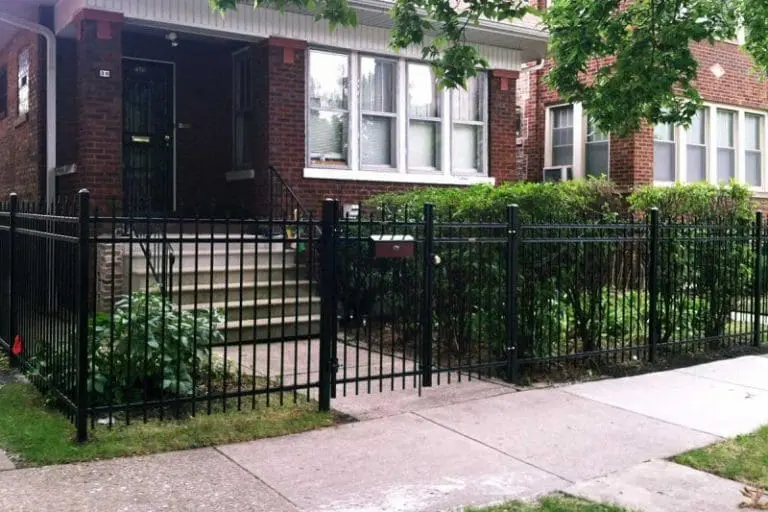
Under the residential rules in the Northlake municipal code, a fence cannot be built in the area between the front of a house and the street. On certain corner lots, a fence also may not extend past the front-yard setback of homes on the adjacent street. Because that restriction depends on how the lot is configured, the fence line should be checked against a current plat of survey before layout. Details are in Section 8-5-3.
-
How far from the property line should a fence be installed in Northlake?
A Northlake fence must sit entirely on the owner's property and at least 3 inches away from the property line. That gap matters because panels, posts and hardware cannot cross onto a neighbor's lot, and it also leaves a small margin for survey tolerance. This one is written as a general rule rather than a residential-only rule, so it applies to commercial and industrial fence lines as well. Confirm the line with a survey before digging.
-
What should I know about easements and drainage before a fence goes in?
Two code points matter. A fence may be placed on a public utility or drainage easement only if the owner signs a written agreement at permit application allowing utility companies and the City to use the easement, with removal and replacement costs on the owner if access is needed. Separately, a fence cannot impede or alter natural surface water drainage, and the bottom of the fence must be at least 3 inches above a drainage area. Both appear in Section 8-5-3(F).
-
Who marks underground utilities before fence posts are dug?
In Illinois, JULIE 811 locates are the standard step before excavation, and they matter in Northlake, IL because gas, water, irrigation and private service lines can sit inside a proposed fence line. Locates are requested ahead of digging, and post depth is then set so footings clear those lines while reaching below the frost line for stability through freeze-thaw cycles. We handle the locate step as part of the project schedule rather than leaving it to the homeowner.
-
Wood Privacy Fence vs Vinyl Fence: which holds up better in Illinois winters?
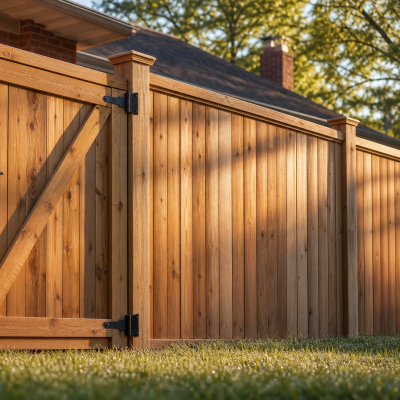
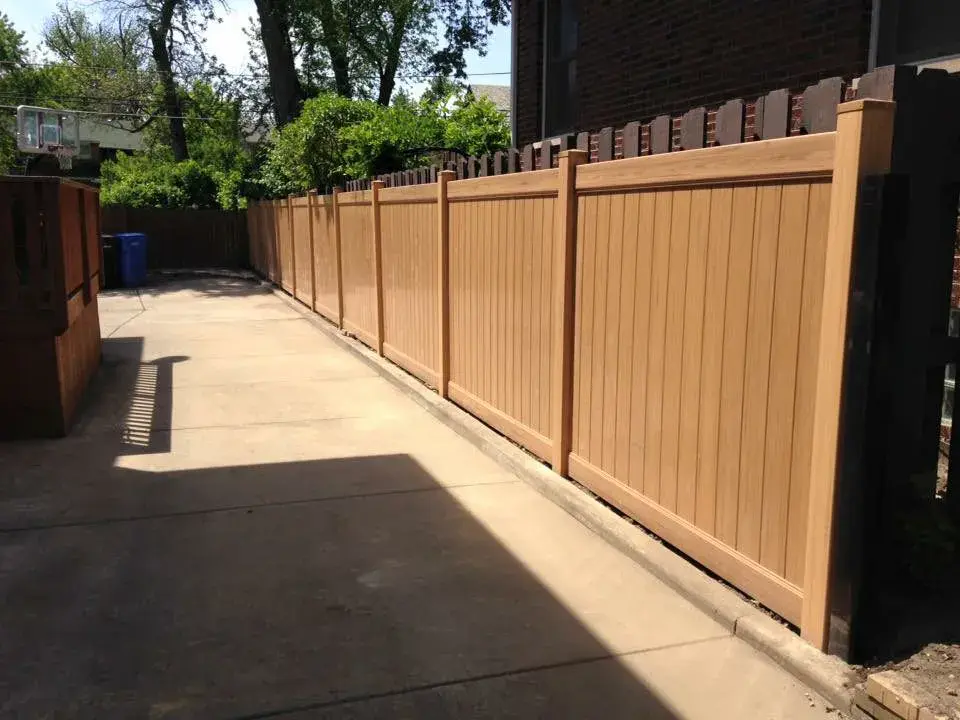
Both handle northern Illinois freeze-thaw cycles if they are installed correctly, and the better choice usually comes down to maintenance and appearance. Wood gives a natural look and can be stained or repaired board by board, but it needs periodic sealing. Vinyl resists rot and insects with far less upkeep, though color options and repair methods are different. Any wood fence installation in Northlake, IL should use rot-resistant species and properly set posts, while vinyl panels need correct spacing for expansion.
-
Is a Chain Link Fence or Steel Fencing better for a commercial property?
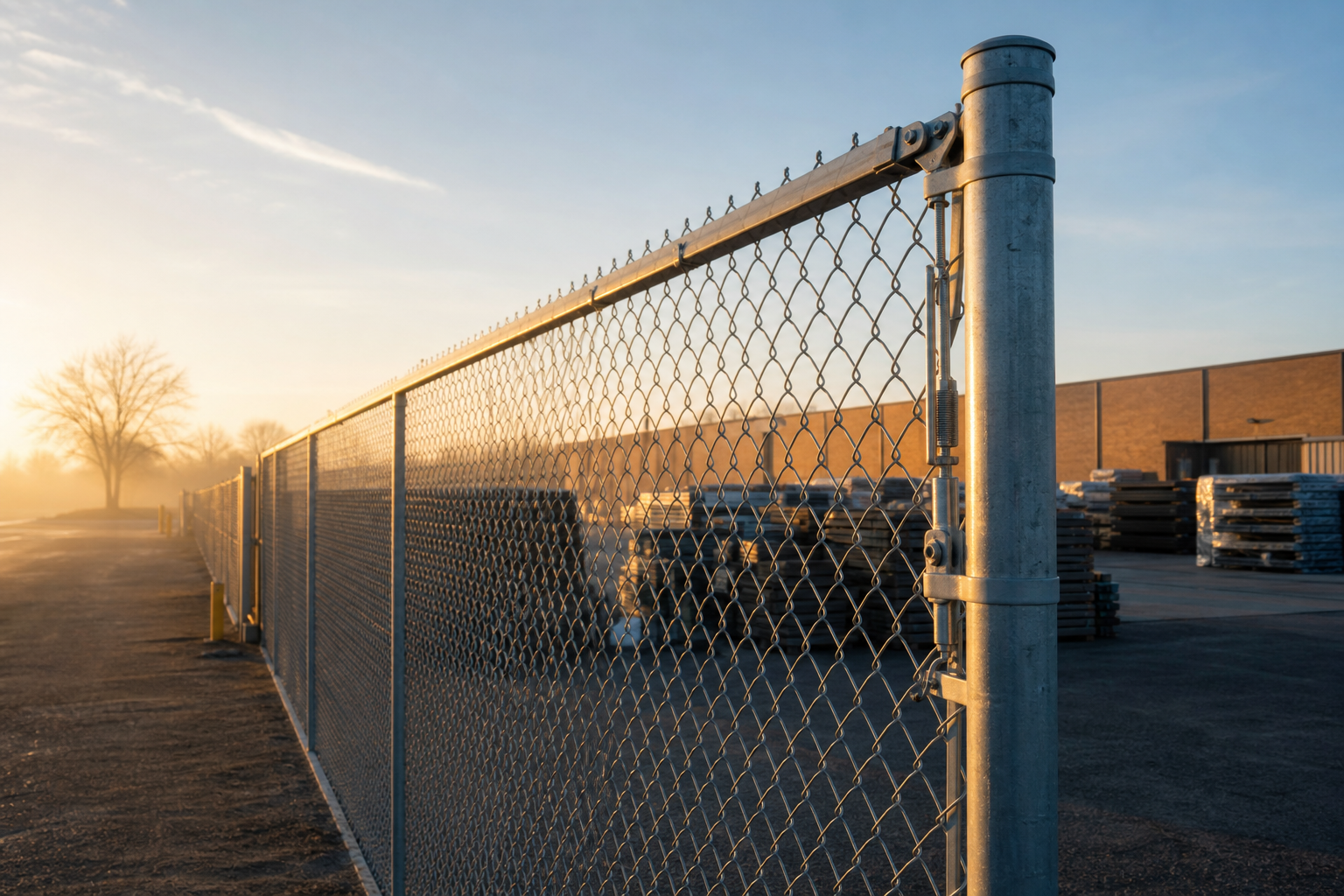
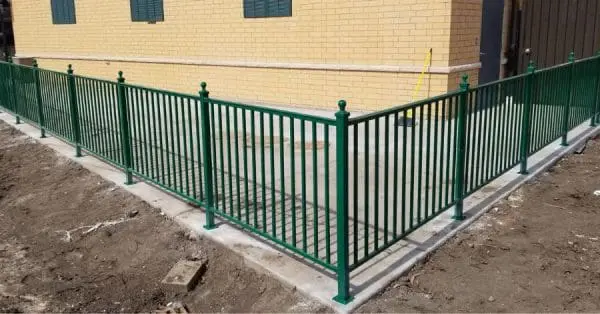
Chain link suits sites where visibility and cost control matter, such as parking areas, equipment yards and storage lots, and it works with privacy slats and gates. Steel fencing is heavier and better suited to higher-security perimeters where forced-entry resistance and long service life matter more than openness. Many commercial projects combine both: chain link around a general boundary and steel at a controlled entrance, gate or high-value enclosure. The right mix depends on the site plan and access needs.
-
Wrought Iron Fence or Aluminum Fence for a residential entry?
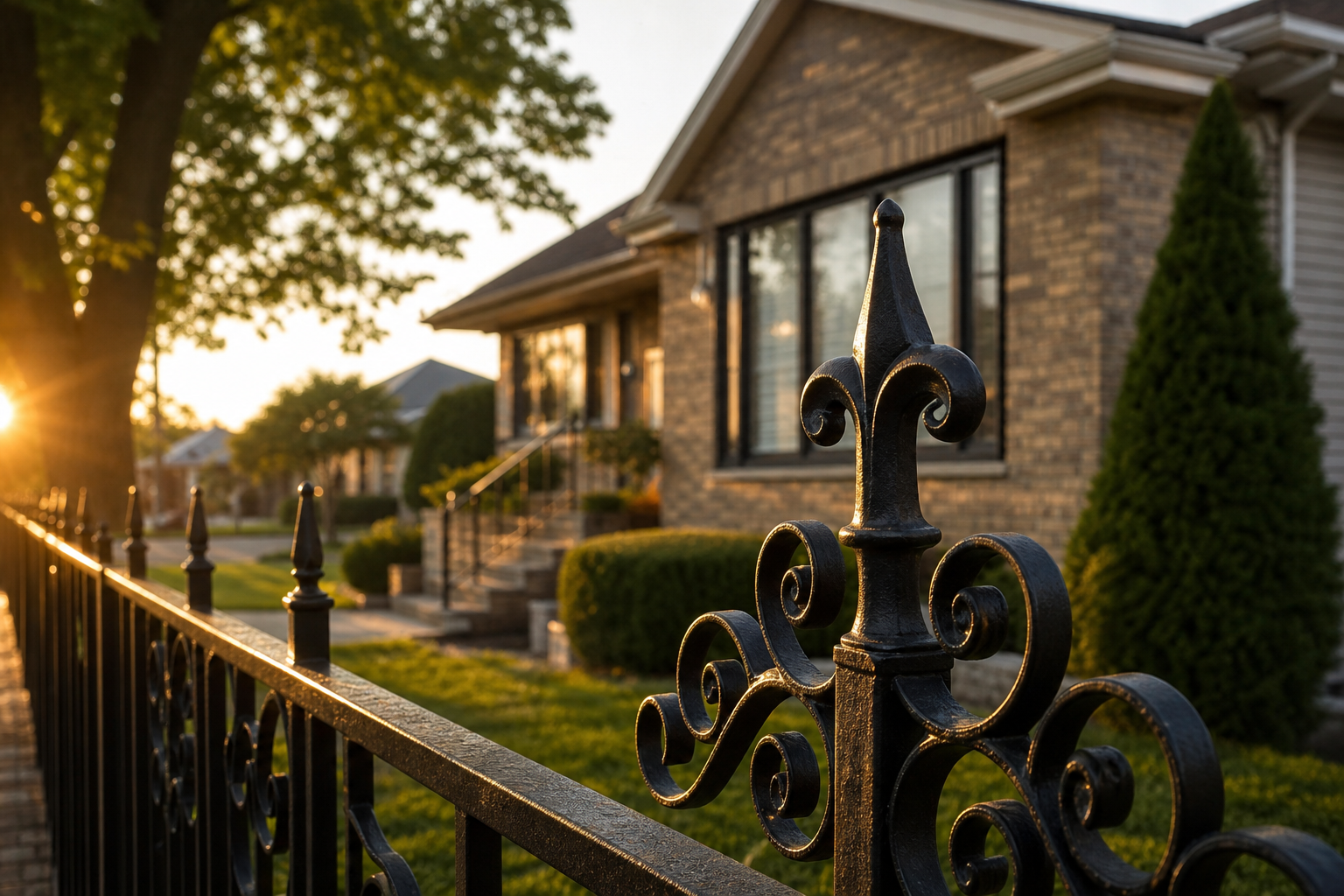
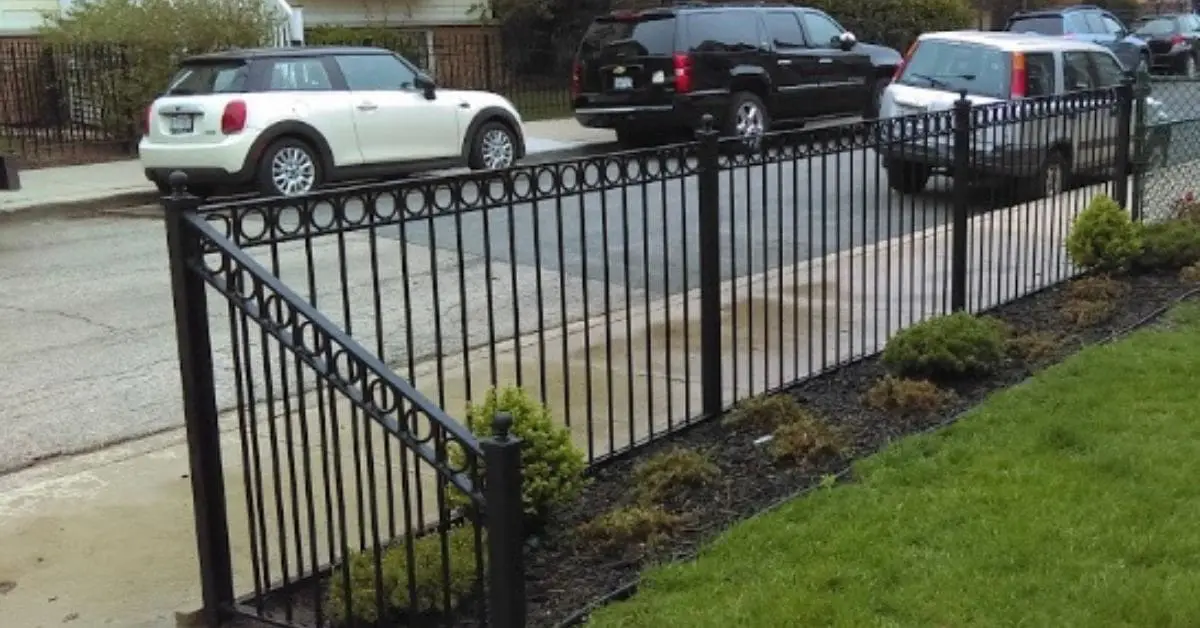
Wrought iron is the heavier, traditional choice for entries where a substantial look and long service life are priorities, and it can be built with real detail in rails and pickets. Aluminum offers a similar ornamental appearance at a lighter weight, and it will not rust, which keeps maintenance low around a front yard or driveway. Both pair well with automated gates. Style, height, powder-coat color and gate hardware usually decide between them.
-
What actually drives the fence installation timeline in Northlake?
Scheduling is driven by a confirmed scope, material lead time, weather, permit review and site access. Custom gates, specialty colors or nonstandard heights add lead time, and wet or frozen ground can push excavation back. Permit review runs on the City's schedule, and inspections are typically requested in advance, so the fence work and the inspection steps have to be sequenced. We give a realistic window once the material and scope are locked rather than a number that ignores those variables.
-
Do you install gates and access control hardware?
Yes. Gate planning covers single versus double openings, swing direction, latch and hinge hardware, and whether a pedestrian gate should be separate from a vehicle gate. On commercial sites, gate placement usually defines the controlled entry point, so it is planned with the perimeter fence line rather than added afterward. Automated operators, keypads and intercoms can be coordinated with the gate frame so the finished assembly works as one system.
-
Can you remove and dispose of an existing fence?
Yes. Removal covers taking down panels, pulling posts, breaking out concrete footings and hauling the material away, which is often the part homeowners underestimate. Before demolition we check post condition and whether any sections are worth keeping, then decide between full replacement and a partial rebuild. If you want the new fence to match an existing style or height, photos of the current fence help us source comparable boards, pickets or panels.
-
Do you handle fence repairs and ongoing maintenance?
Fence repair support covers leaning posts, storm damage, broken pickets, sagging gates and sections that no longer line up. Matching an existing fence style is possible when the material is still available, and a partial repair is often more sensible than replacing a whole run. For older wood fences, replacing posts and resetting the frame usually brings the line back. Maintenance needs differ by material: wood wants sealing, vinyl wants cleaning, and metal wants touch-up on scratches.
-
Do you serve all of Northlake, IL and nearby communities?
Northlake, IL is inside our service area, along with the surrounding Leyden Township and Cook County communities, so residential yards, commercial lots and industrial properties in the city are all in range. Requests arrive from both sides of town and from addresses near the municipal borders. If you are unsure whether an address falls inside the area, send it with your request and we will confirm. You can also check the Map of Northlake, IL.
-
How do I get a free on-site estimate in Northlake, IL?
Send your details through our contact page, or call (773) 312-3051 Monday to Saturday, 9 AM to 4 PM. Include property type, approximate linear footage, material preference, desired height and whether gates or access control are needed, plus photos, a plat of survey and the nearest cross street. We are a Fence Company Northlake property owners and facility managers can reach directly, and we will walk the layout and put the scope in writing.