A Franklin Park, IL fence project moves through four stages you can plan around: an on-site measure, a marked layout with utility locates, post setting and installation, then a final walkthrough with the person who ordered the work. No digging is scheduled until the fence line, gate swings and equipment access are confirmed on the ground. That order is what separates a real fence installation in Franklin Park, IL from a phone quote built on guesswork — and it holds whether the work is a backyard privacy run behind a house or a long perimeter around a warehouse or storage yard.
A walked site also puts competing bids on equal footing: same linear footage, same gate count, same material, same access plan. It is also easy to verify, because a fence company Franklin Park homeowners and facility managers trust can show the same four stages in writing, with the walk completed before a final number is confirmed.
Stage 1: On-Site Measure and Property Walk
The first visit is a working walk, not a sales pitch. A fence company in Franklin Park, IL walks the property with you to check grade changes, corner angles, driveway widths, gate placement and the condition of anything coming out before measuring the run. Residential sites get attention to backyard privacy lines, pet and child containment, and where a driveway gate has to swing clear of a car. Commercial sites get attention to loading zones, parking aisles, storage yards and pedestrian routes. What is measured here becomes the scope the crew builds to — the basis of an on-site assessment in the Franklin Park service area rather than a guess from a satellite image.
Stage 2: Layout, Utility Locates and Staking
Before any hole is dug, the line is laid out on the ground with string, paint or stakes, and corner and gate posts are set as reference points. Utility locates come first, with the locate request called in and the markings honored before a machine or hand auger touches the soil. Layout is also where access gets solved — alley-access rear yards are treated as a layout consideration, since a longer material carry or a narrower machine changes how panels or pickets reach the line across the Franklin Park service area (Map of Franklin Park, IL). Gate posts are positioned first, because every hinge and latch point downstream depends on them.
Stage 3: Post Setting and Fence Installation
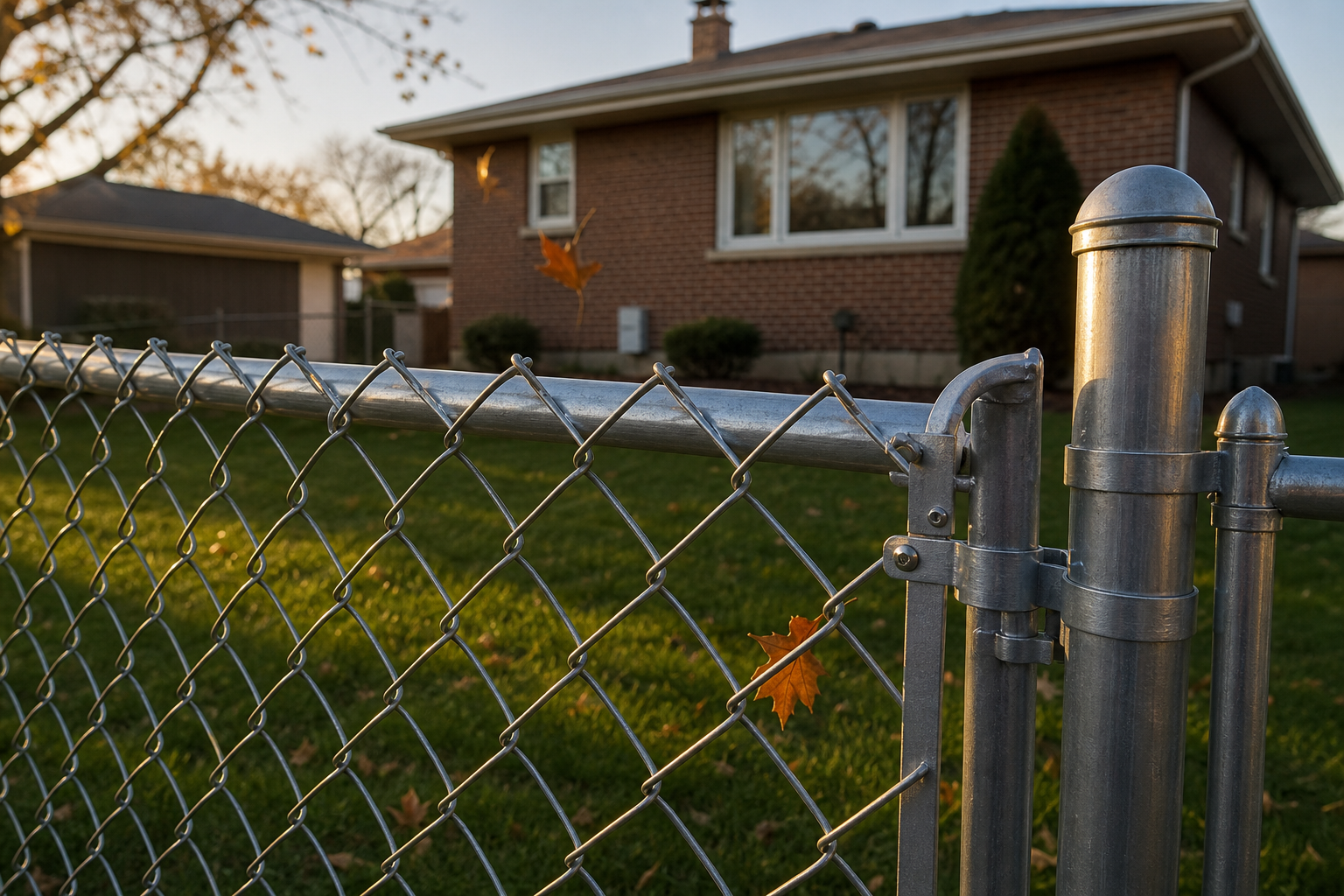
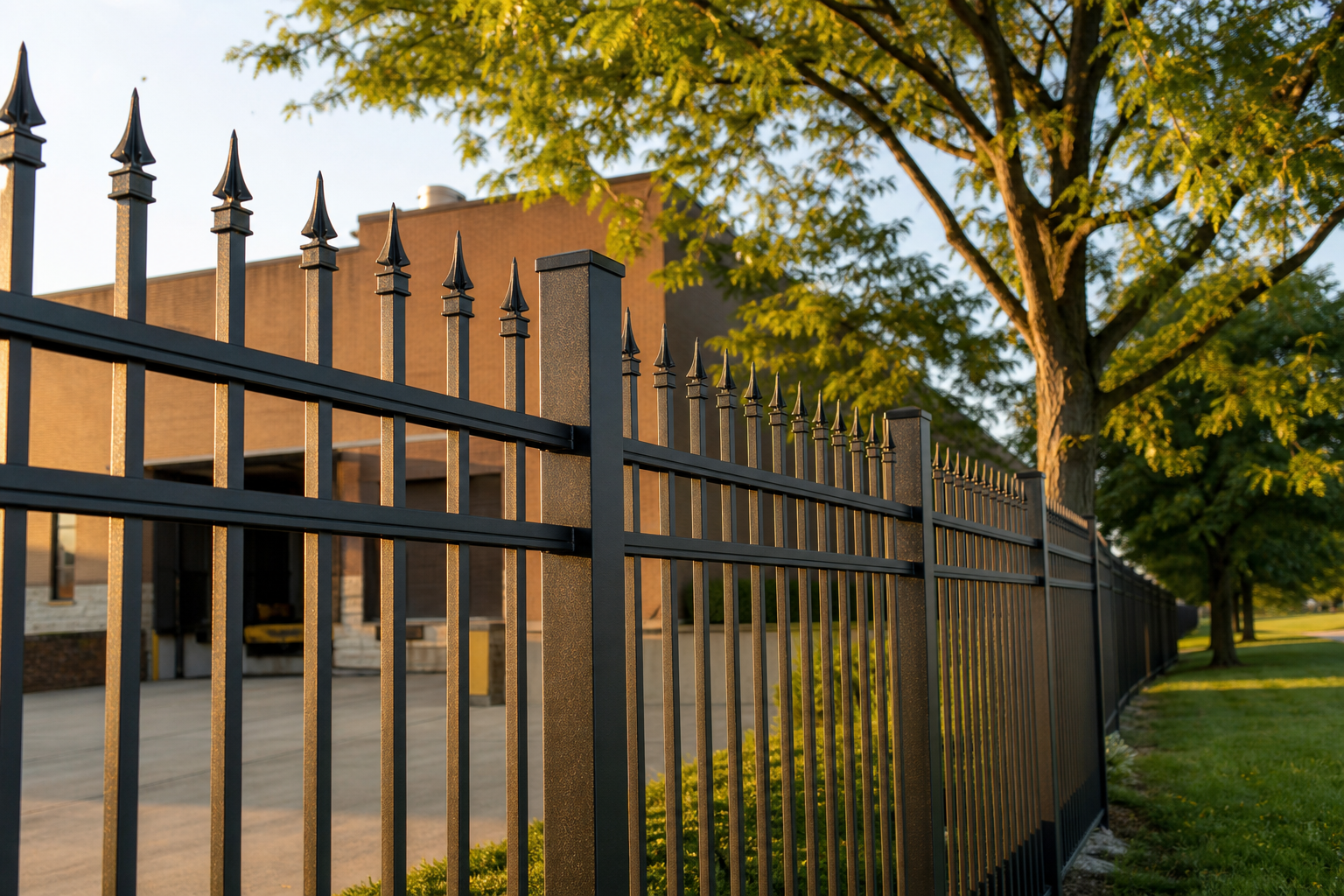
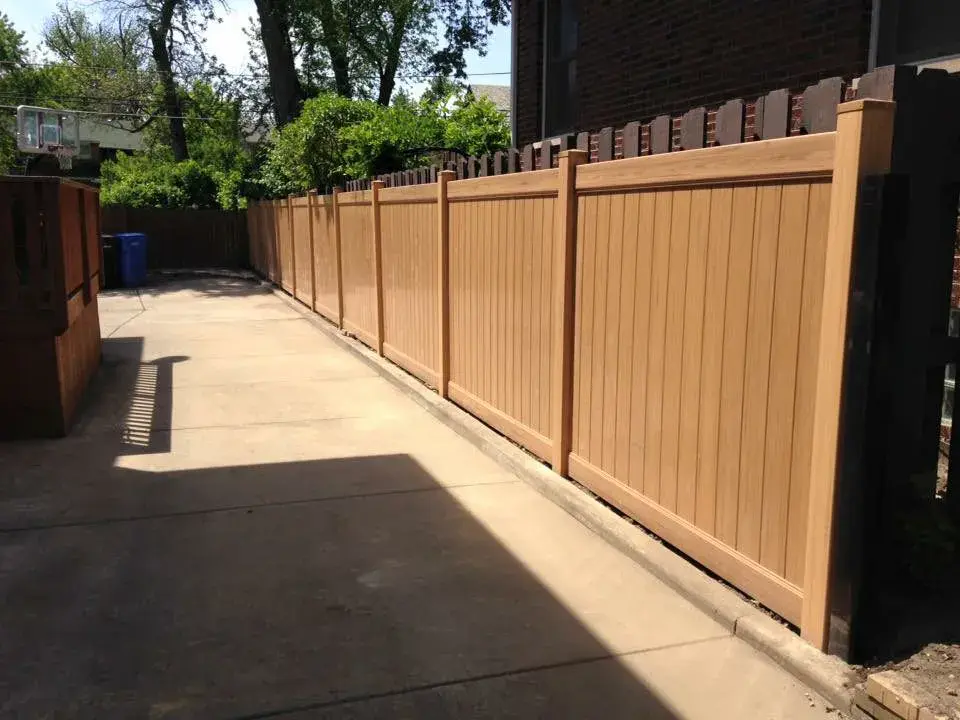
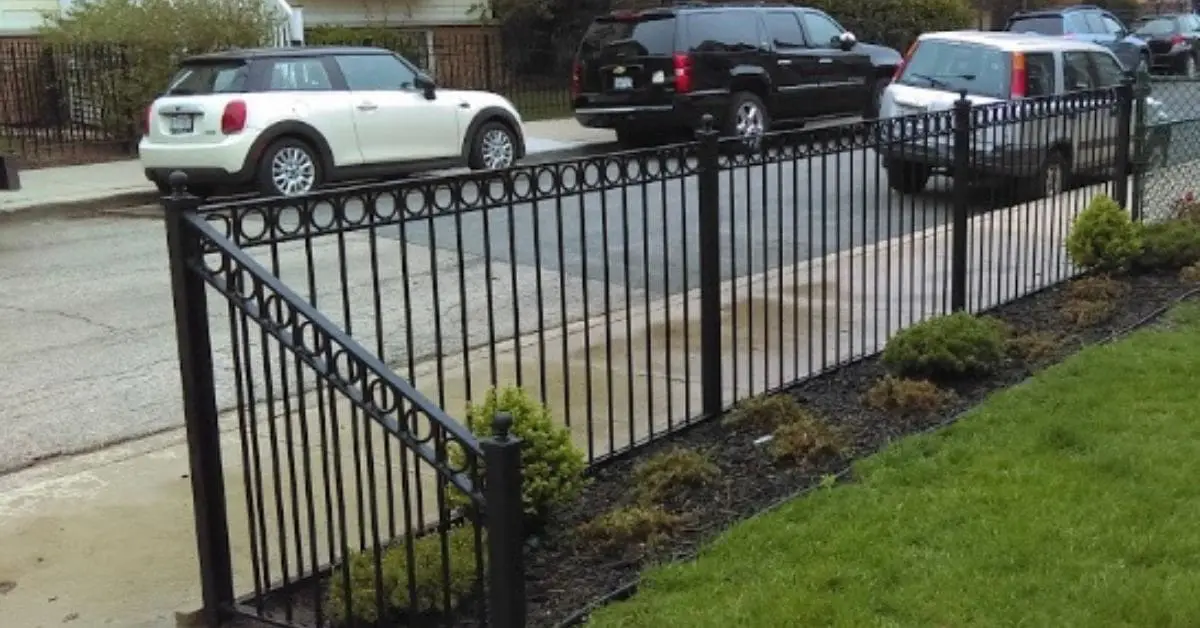
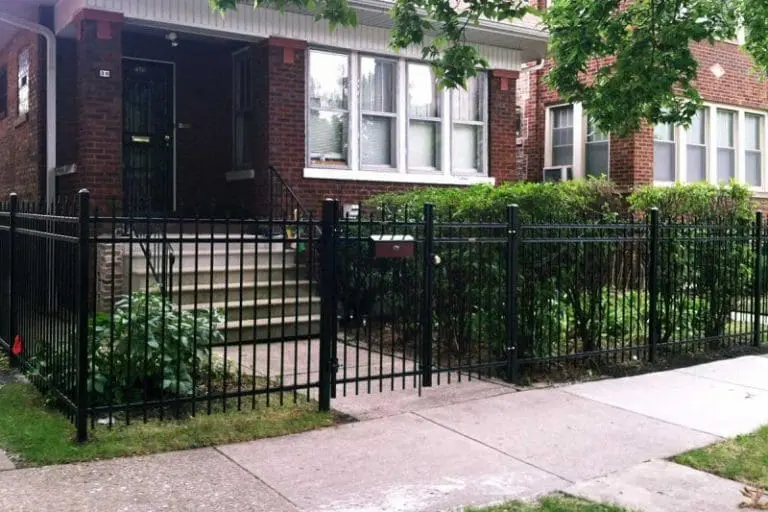
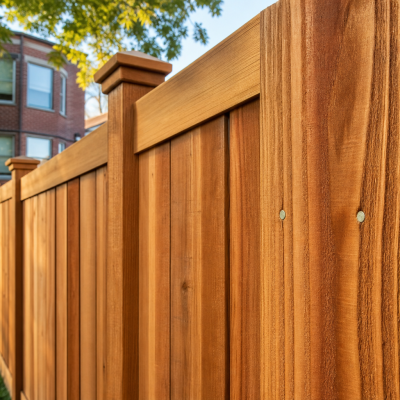
This is the visible phase. Posts are set to a consistent depth in concrete, given time to set, then rails, panels, mesh or pickets follow. The line type drives the sequence: a wood privacy fence is typically assembled rail by rail with pickets set to a uniform reveal, vinyl panels lock into routed posts, chain link mesh is stretched and tensioned along the top rail, and aluminum or wrought iron systems are assembled from welded or modular sections. Steel fencing on a commercial site follows the same logic with heavier posts and wider spans. Gates are hung last, because a gate only swings true when the posts holding it are right. The Chicago Fence Builders Team works that order deliberately: post depth and alignment first, the visible fence second, hardware third.
On commercial work, the crew often stages the site in sections — perimeter first, then parking and storage areas, then controlled entry points — so the property keeps operating while the line goes up. Residential installs can usually be worked straight through, but the same discipline applies: no fence section goes up on a post that has not been verified.
Stage 4: Final Walkthrough and Handover
The project closes with a walk of the finished line, with you at the property. Posts are checked for plumb, runs are checked for straight lines and consistent heights, every gate is opened and latched, hardware is adjusted, and the site is cleared of offcuts, packaging and old material from any removal work. Residential owners also get the care basics explained — how to clean vinyl, how to spot a board that needs attention on a wood privacy fence, and how a yard or driveway gate should be operated and maintained. Commercial walkthroughs cover gate access, control points and how the perimeter is meant to function day to day. Nothing is left as a verbal loose end.
How Long a Fence Project Takes
Timing follows scope, not a stopwatch. A single backyard run — a wood privacy fence or vinyl panels across a rear line with one gate — usually moves through the four stages in one continuous push, while a commercial chain link perimeter with several gates, limited working hours or a security-sensitive layout is staged so the property is never wide open. The variables that stretch a schedule are practical ones: linear footage, corner count, gate count, material set time and how much room the crew has to work. What does not change is the order — measure, layout, install, walkthrough — which is why a realistic schedule can be built at the walk instead of guessed at over the phone.