-
Do I need a permit for a fence installation in Barrington, IL?
Yes. The Village of Barrington states that a permit is required for all fence installations. Submittals typically include a Village construction permit application, a plat of survey with the proposed fence location clearly marked, and fencing specifications covering material, height, and style. Contractors and subcontractors must also be registered with the Village before the permit is issued, so confirm parcel details with Development Services before ordering materials. Building Permits and Inspections
-
What are the fence height limits in Barrington residential districts?
In R-1 through R-8 and B-R districts, front-yard fences between the front property line and the front face of the primary structure may not exceed 3 feet, with pickets and posts allowed no more than 6 inches beyond the top horizontal element. Fences in a required corner side yard may not exceed 4 feet, and rear- and side-yard fences may be up to 6 feet. Confirm your district before building. Zoning Ordinance Section 4.5-A
-
How tall can fences be in Barrington commercial and nonresidential districts?
In B-1, B-2, B-3, B-4, B-5, A-1, M-A, M-1, O-R, P-L, O-S, and R-C districts, decorative fences or screen walls in front yards may not exceed 3 feet unless a special use or planned development ordinance requires more screening height. Fences in required corner side yards may not exceed 4 feet, while rear- and side-yard fences and walls may be up to 6 feet. Facility owners should verify their district before ordering panels.
-
What is the setback rule for a solid fence taller than 3 feet?
Where a fence is over 3 feet high and less than 33 percent open across its face, the Zoning Ordinance applies a setback rule: the fence must sit at least 5 feet behind the vertical plane of the front wall of the primary structure. That keeps solid screening out of the front-yard visibility zone. Sections 4.5-A.3 and 4.5-B.3 both use this standard, so measure carefully before posts are set.
-
Can I build a taller fence if my lot borders railroad property?
Where a lot directly abuts railroad property in a rear or side yard, fences and walls along the affected property line may be up to 8 feet high under Sections 4.5-A.5 and 4.5-B.4. Residential and B-R lots abutting railroad property may also place the more finished side facing inward. This is a narrow exception, so confirm that your parcel truly borders railroad right-of-way before planning at that height.
-
Why does the property line and plat of survey matter so much?
A marked plat of survey is part of the standard fence permit submittal in Barrington, and it matters for more than paperwork. Property-line location determines where posts can be set, how corner side-yard and side-yard height limits apply, and whether an easement crosses the planned fence line. Review the survey against the layout, confirm utility locations before digging, and flag any unclear boundary before the crew arrives.
-
How does the estimate and planning process work for a Barrington project?
Estimates for Barrington are scheduled on site so the team can measure the property line, note gates, grades, access, and existing fence condition, then confirm which materials fit the layout. The Chicago Fence Builders Team is licensed, bonded and insured, with 15+ years installing residential and commercial fences. You finish with a clear scope, material direction, and next steps instead of a rough guess.
-
Is a wood privacy fence a good fit for a suburban backyard here?
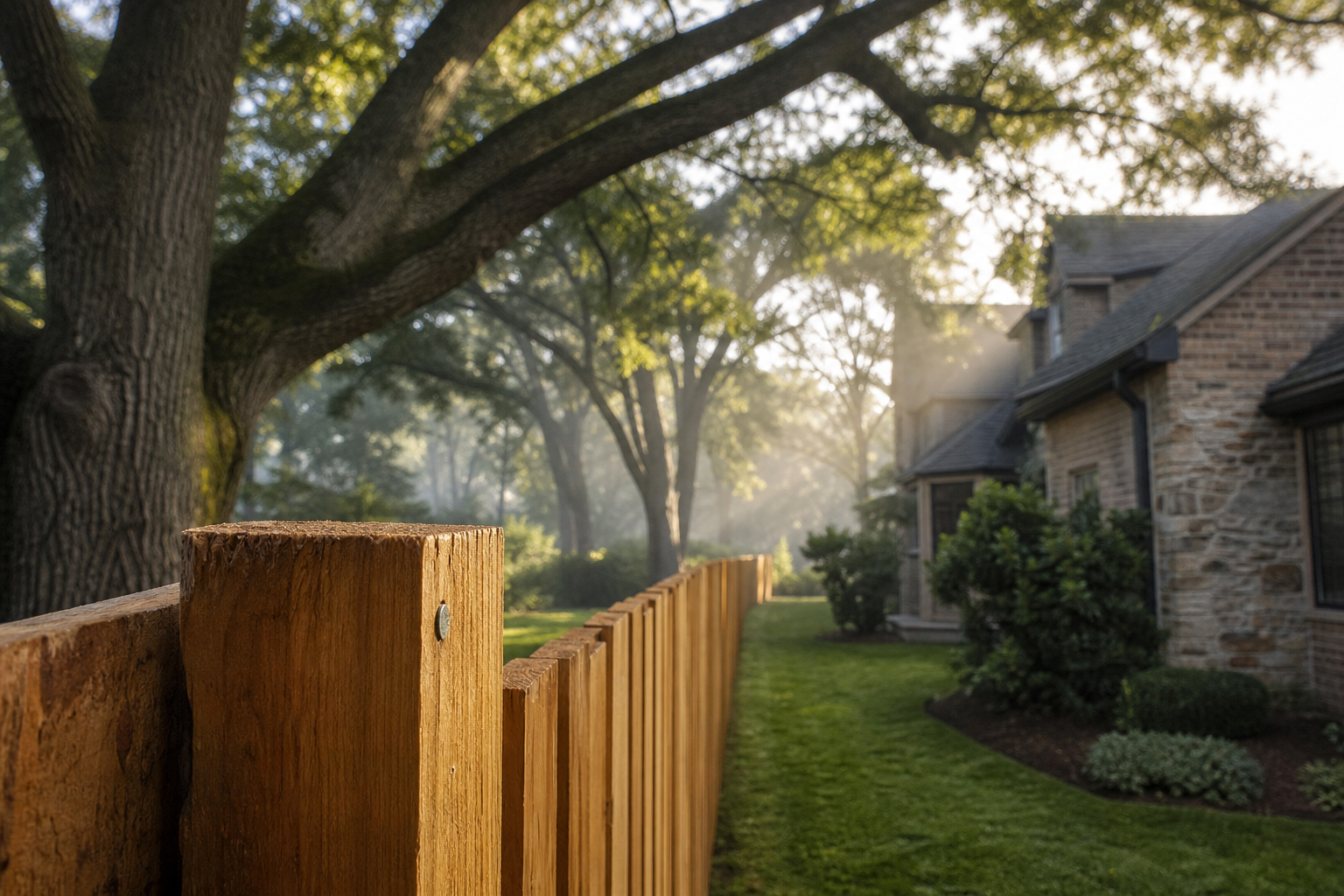
A wood privacy fence in Barrington, IL stays a common choice where screening and a traditional look matter most. Boards can be set tight for solid privacy, and residential rear- and side-yard limits allow up to 6 feet, which suits most backyard layouts. Wood needs periodic sealing or staining to handle wet winters and summer sun, so plan on maintenance every few years rather than never.
-
How does a vinyl fence compare for privacy and upkeep?
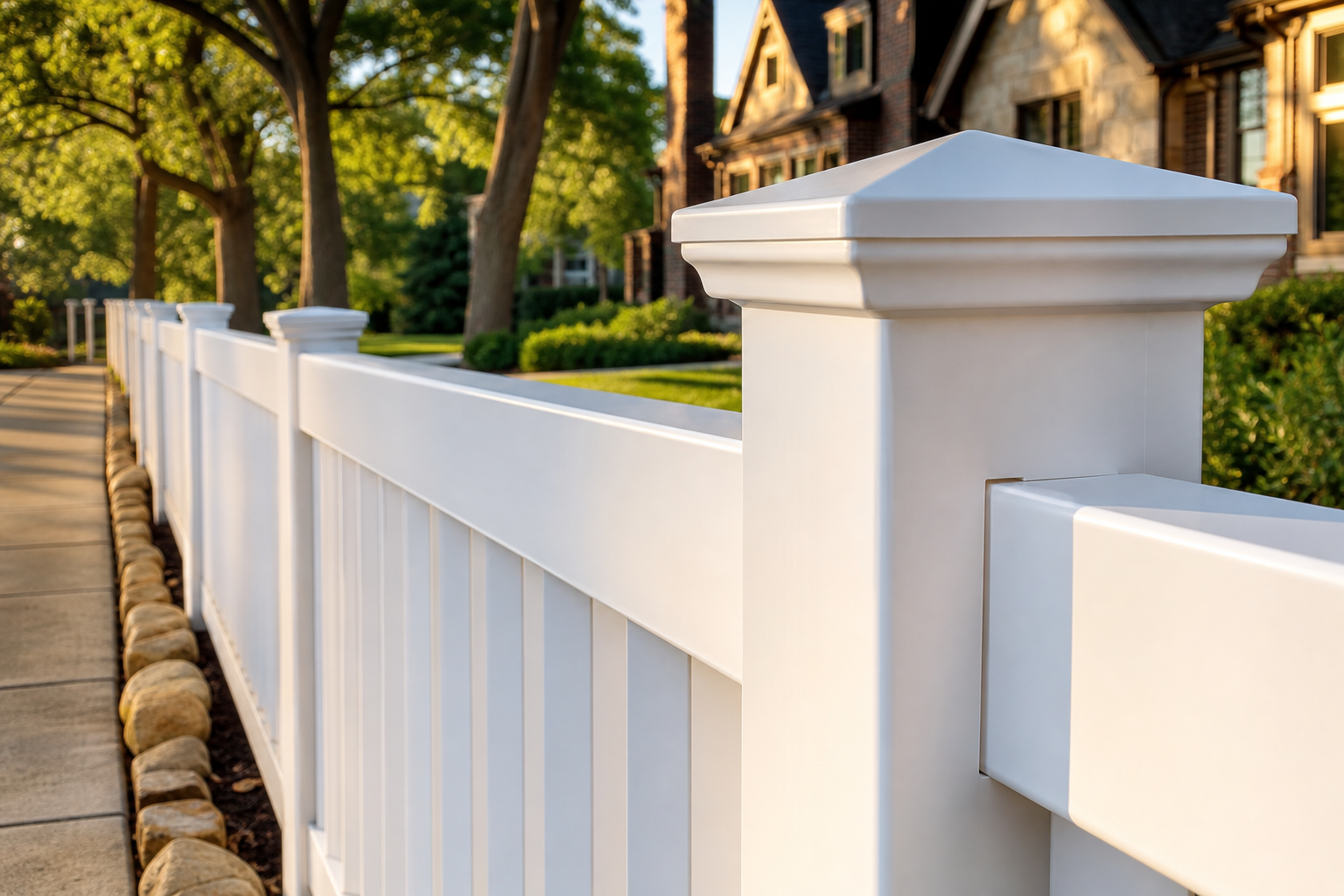
A vinyl fence in Barrington, IL is often weighed against wood, and the main trade-off is maintenance. Solid vinyl panels screen a yard without annual staining, and they clean up with soap and water after a season of dirt and pollen. Vinyl can feel lighter than wood to some owners, and cold weather makes it more brittle during installation, so scheduling the work in milder conditions helps.
-
When is a chain link fence the practical choice?
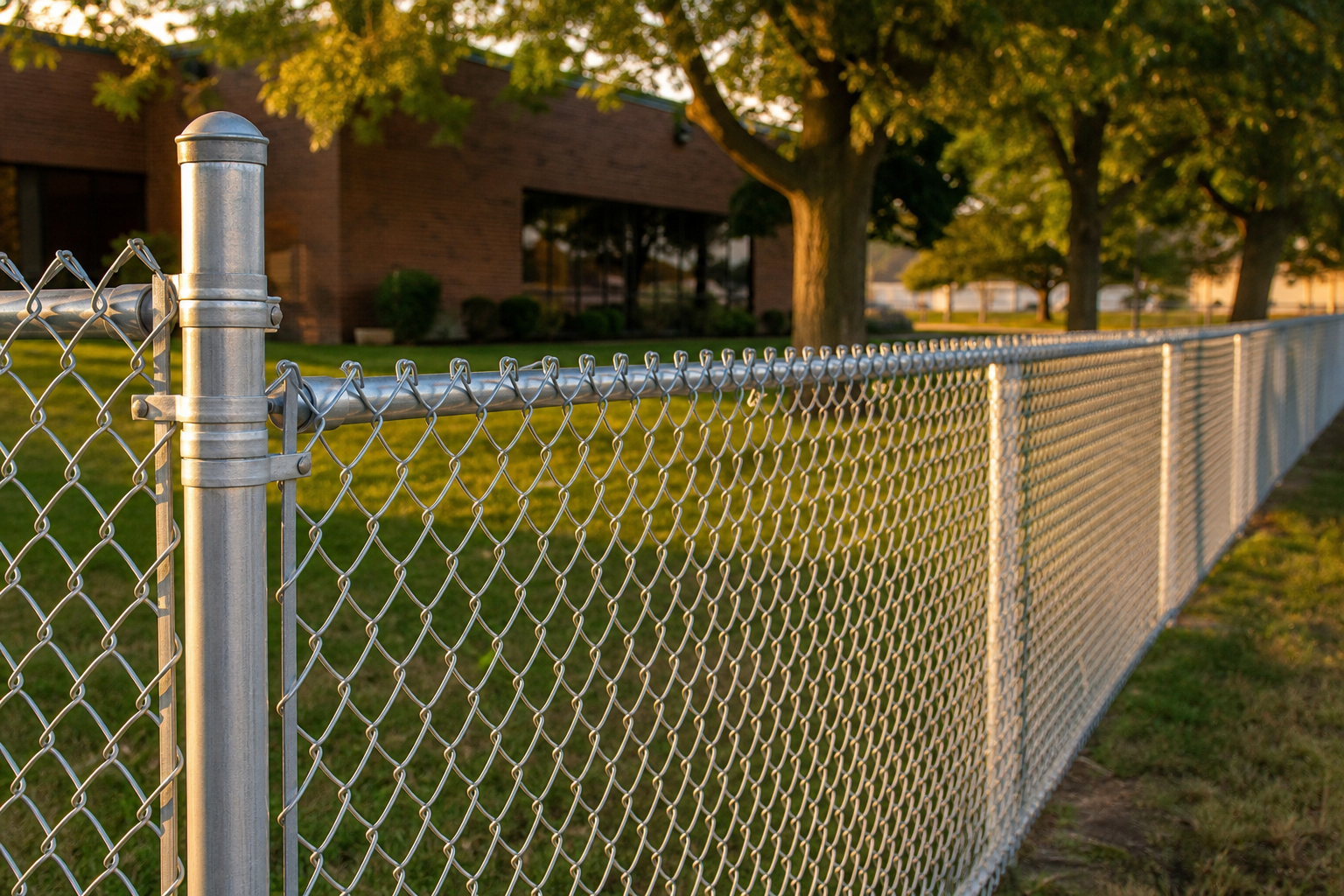
A chain link fence in Barrington, IL works well when visibility and perimeter definition matter more than full screening. It suits side yards, pet containment, and commercial lots where staff or cameras need a clear line of sight. Galvanized or vinyl-coated finishes hold up through wet winters. Because the fabric is open, review front-yard and corner side-yard height limits before choosing panel height.
-
What maintenance should I expect through freeze-thaw cycles?
Freeze-thaw movement is the main maintenance driver around here. Water that seeps into post holes, gate hardware, and wood end grain expands when it freezes, which can loosen posts and shift gates over time. Practical steps include resealing wood, tightening gate hinges each spring, keeping soil and mulch away from panel bases, and checking for heaving after a hard winter.
-
Can you repair an existing fence instead of replacing the whole run?
Often yes. Fence repair in Barrington, IL usually starts by checking posts, rails, and panels separately, since a fence with sound posts can often be restored by replacing damaged sections only. Leaning runs after freeze-thaw movement may simply need post resetting. If most posts are rotted or the layout is failing, replacement usually delivers better long-term value. Photos help the team assess this.
-
Do you handle removal and disposal of an old fence?
Removal is typically handled as part of the same project scope. The team reviews existing materials, yard access, gate width for equipment, and disposal needs, then coordinates tear-out before new posts are set. Concrete footings are the slowest part to remove, and utility marking should be completed first. Sharing photos and the approximate fence length speeds up planning considerably.
-
Can a new fence match the style of an existing or neighboring fence?
Matching an existing fence is usually possible when the original style is still available. Board width, picket spacing, rail count, post size, cap style, and color all affect how closely new sections blend with the old run. On partial replacements, sun-faded wood or vinyl may never match perfectly, so some owners plan a staged replacement instead. Photos of the existing fence help confirm what can be sourced.
-
How long does a typical fence project take in Barrington?
Timelines depend on scope, permit review, material availability, and weather. Small repairs and single-gate work are often scheduled quickly, while full installations require permit issuance and material lead time before a crew date is set. Frozen ground in winter can slow post setting, and spring scheduling fills up early. A realistic sequence is shared once the estimate is reviewed and the property measured.