-
Do I need a permit to install a fence in Schiller Park, IL?
Yes, in most cases. The Village residential fence handout states a permit is required for new and replacement fences where new post holes are being dug, and residential permit review typically takes 7 to 10 days. Projects that add height or change placement can raise additional questions about height, screening, and setbacks, so confirm current requirements with the Village Community Development Department before installation. The Village fence handout lists the current submissions.
-
Is a permit required to replace fence panels or a gate?
Not always. The Village handout states no residential fence permit is required for replacing chain link, wooden fence panels, or a gate when no new post is involved. If the work includes digging new post holes, resetting posts, or changing the fence location or height, the project moves into permit territory. Sharing photos and a written scope of the replacement work with the Village before you buy materials helps avoid surprises and keeps everyone clear on what is being swapped and what stays.
-
Which fence materials are allowed on a residential fence in Schiller Park?
The Village residential fence handout lists wood, PVC, and wrought iron among permitted materials, and lists chicken wire, corrugated metal, canvas, barbed wire, electric wire, and materials likely to cause bodily injury as prohibited. Because those rules apply to residential fences, commercial or industrial projects may be reviewed differently. Material availability, height, and location can also affect approval, so confirm what applies at your address before ordering. The Village fence handout outlines the residential guidelines.
-
How deep should fence posts be set in Schiller Park?
The Village handout states that residential fence post holes must be at least 42 inches deep. That minimum matters in the Chicago area, where freeze-thaw cycles can shift shallow footings and leave posts leaning. Depth can change with fence height, gate weight, soil conditions, and what the Village requires for your location. Confirm the current requirement before excavation, and have underground utilities located before digging begins, since post setting is the part of the job that is hardest to correct later.
-
Where on my property can the fence be placed?
The Village handout states fences must be installed within the property and must not encroach on neighboring property; locating the fence correctly is the applicant's responsibility. It also states that fences are not allowed in the parkway. Because placement drives both approval and neighbor relations, review a current plat of survey before layout. A licensed, bonded and insured fence contractor can walk the line with you, flag utility easements, and document setbacks, while the Village confirms what is allowed at your address.
-
What if my property is in a flood plain or flood way?
The Village handout notes that there may be limits to fence installation, materials, posts, or face openings in a flood plain or flood way, and directs applicants to ask for verification. If your lot touches a drainage channel, creek, or mapped flood area, treat that as a planning item rather than a detail. Confirm whether your parcel is affected, and ask which material, post, and spacing rules apply before ordering. Keep approval documentation with your project file for inspections.
-
Is a wood privacy fence a good choice for a backyard?
Wood privacy fencing is usually the first option homeowners ask about when the goal is a solid backyard screen with a natural look. It can be built at heights and styles that fit a residential lot, and it can be repaired board by board instead of replaced all at once. Wood does need periodic sealing or staining in Chicago-area weather, and material grade affects how long it holds up. Confirm the height and placement rules that apply at your address before you order.
-
How does vinyl fencing hold up in this climate?
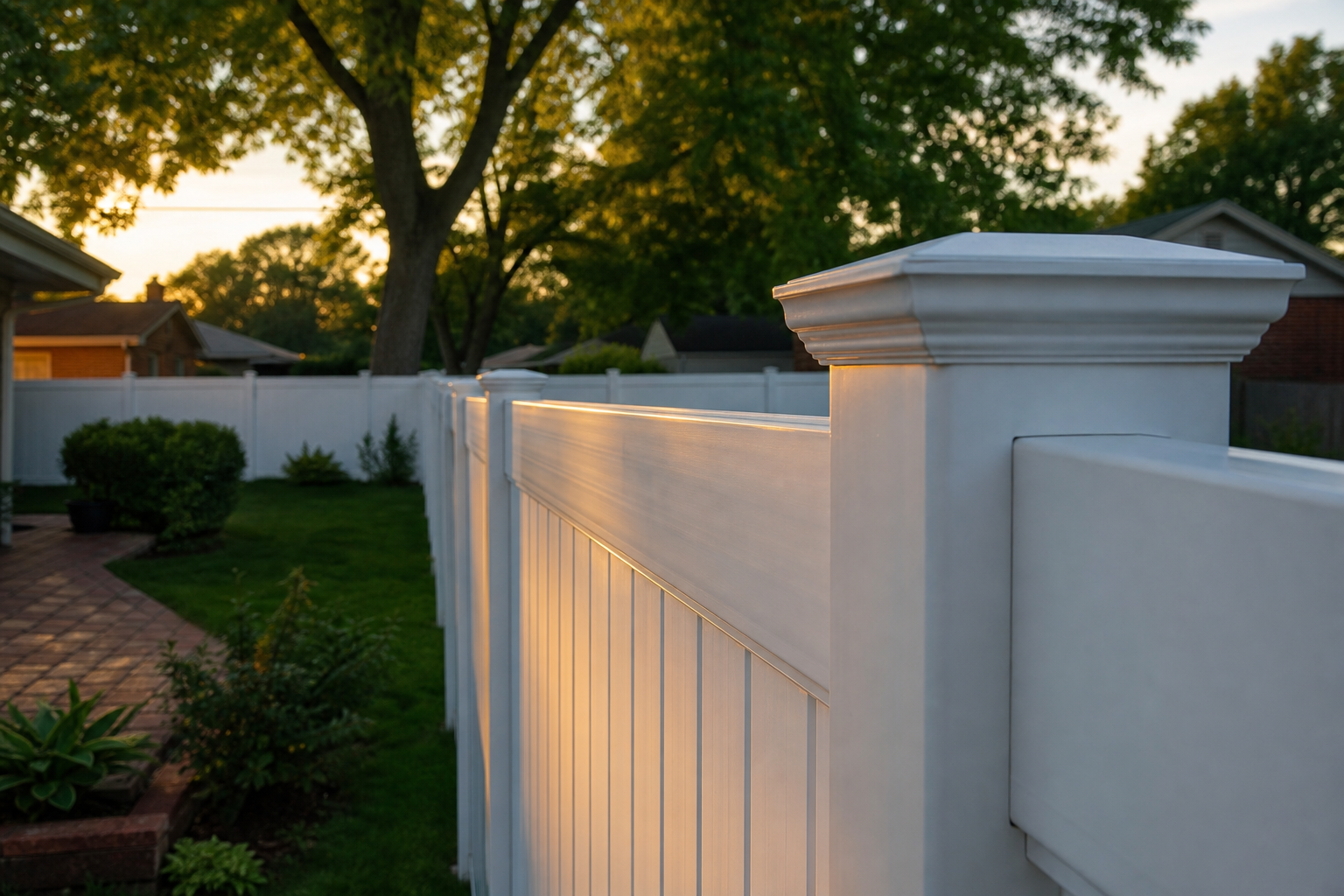
Vinyl fencing is a strong fit when you want privacy or a clean perimeter look without recurring staining. It resists moisture and rot, which suits the freeze-thaw swings around Schiller Park, and it cleans up with a garden hose. Panel styles, colors, and privacy levels vary widely, so the choice comes down to the look you want and how the fence closes against gates and corners. Vinyl also produces a different sound and feel than wood.
-
When does chain link make sense over other options?
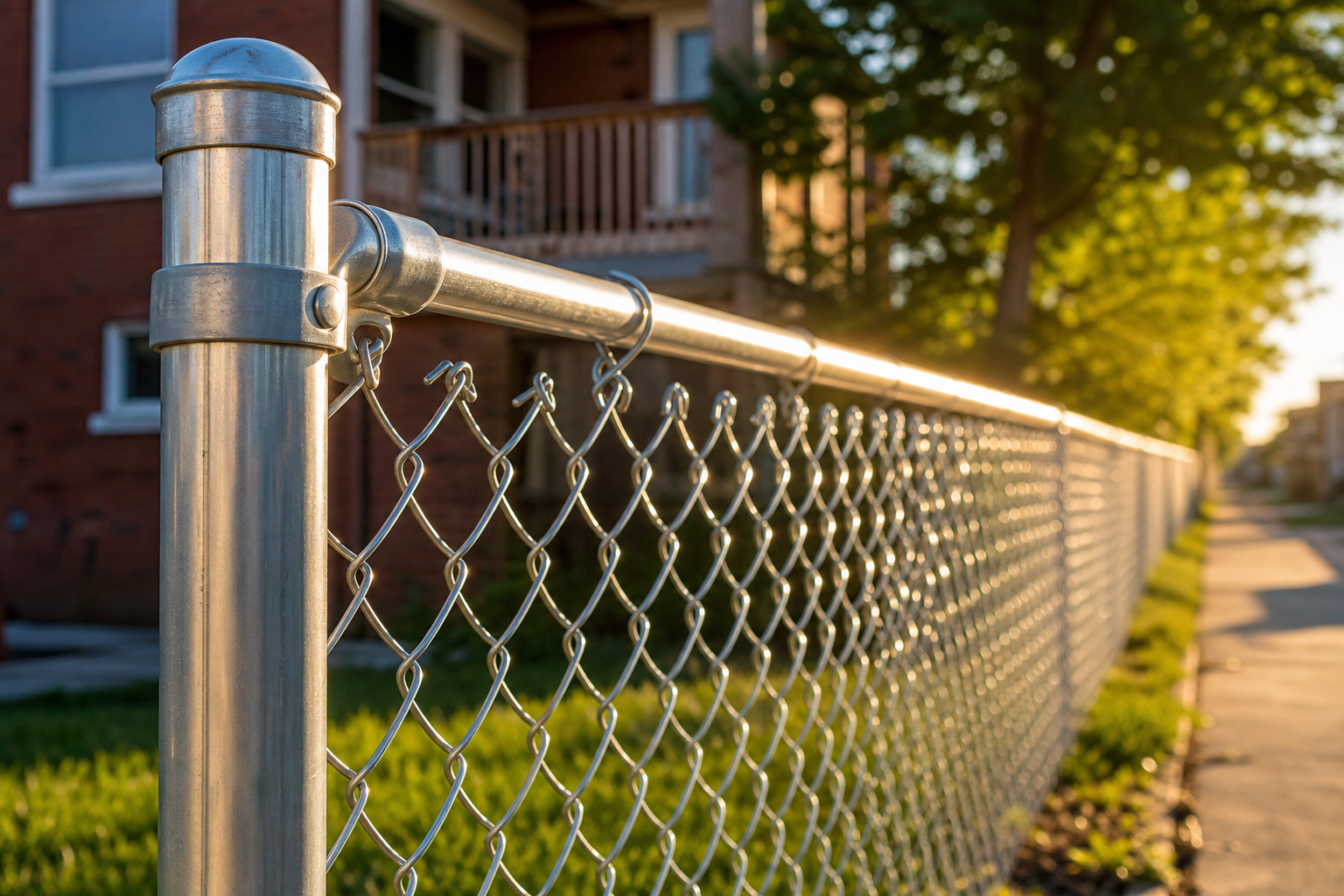
Chain link is often chosen for budget-conscious boundaries where visibility matters more than privacy, such as side yards, pet areas, storage lots, and parking perimeters. It works well with gates and access control hardware, and it holds up with minimal maintenance compared with wood. Coated finishes and gauge options change how long a run lasts and how it looks next to a building. For commercial sites, confirm height, screening, and permit requirements separately from residential rules.
-
What are the advantages of wrought iron fencing?
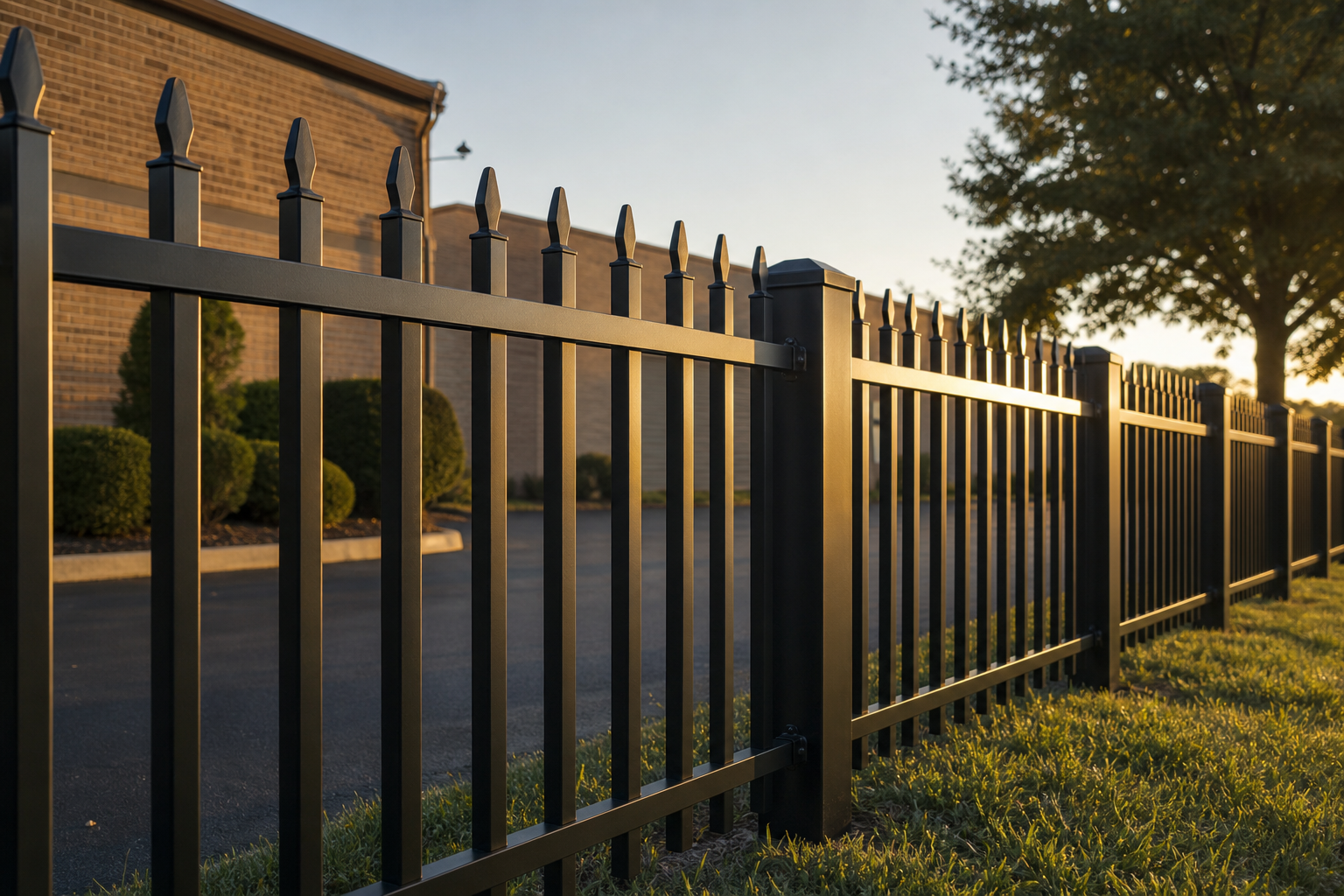
Wrought iron fencing gives you an open, ornamental look that defines a boundary without blocking the view, which suits front yards, courtyards, and entries where curb appeal matters. In the Village's residential material list, wrought iron is named among permitted materials. It is heavy, generally long-lasting when properly finished and maintained, and pairs well with matching gates. Because these fences are visible from the street, style, height, and finish should be discussed before fabrication.
-
Should I choose aluminum instead of wrought iron?
Aluminum fencing offers a similar open, decorative appearance to wrought iron at a lighter weight, which can simplify installation on longer runs and near gates. It resists rust better than bare steel and is usually powder-coated, so color choices hold up through the seasons. Homeowners often choose aluminum for pool areas, front yards, and decorative perimeters where visibility is preferred. For pool enclosures, ask about the barrier, gate, and latch rules that apply, since those requirements differ from a standard yard fence.
-
Where is steel fencing typically used?
Steel fencing is the heavy-duty option, often used for commercial perimeters, equipment yards, and facilities that want a strong, secure boundary with controlled access points. It can be fabricated to specific heights and paired with gates, operators, and access control systems. Steel requires proper coating or galvanizing to manage rust in Midwest weather, so finish specification matters as much as gauge. Because these projects often involve screening or setback rules, confirm commercial requirements before fabrication begins.
-
Do you install gates and access control systems?
Yes, gate installation and access control are part of the work. Options range from a simple walk gate to driveway gates with operators, keypads, remotes, and intercom or video entry. Residential projects usually prioritize convenience and matching the fence line, while commercial and industrial properties often focus on traffic flow, after-hours access, and separating visitor parking from service yards. Gate placement affects swing clearance, post depth, and inspection points, so it should be planned early.
-
Do you repair, replace, remove, and match existing fences?
Repair, replacement, and removal can all be handled as part of a project. Small fixes such as a sagging gate, loose post, or storm-damaged section are often worth repairing, especially when the rest of the fence is sound. Full replacement usually makes sense when posts are failing or the material is at the end of its service life, and that scope can include hauling away the old fence. Matching an existing style is possible when the material and profile are still available, so send photos.
-
Which areas do you serve, and how do I request an estimate?
Work is scheduled across Schiller Park, IL and nearby Cook County communities, including Leyden Township. To prepare an estimate, share your property type, approximate linear footage, intended fence line, gate or access control needs, and any material preference, plus photos if you have them. You can view the area on the Map of Schiller Park, IL. Requests can be handled by phone at (773) 312-3051 or through the contact page, Monday through Saturday, 9 AM to 4 PM.