If you are pricing a new backyard fence in the western suburbs, the residential fence installation cost you are quoted in Aurora or Wheaton can look very different from the number a neighbor received in Oswego — even when both projects sound identical when described over the phone. That gap is rarely random. Fence pricing in northeastern Illinois is built from measurable inputs: linear footage, fence height, material, gate count, removal of the old fence, and how easily crews and equipment can reach the work area. This guide walks through those inputs across the Naperville area so you can compare estimates on equal terms instead of comparing bottom-line totals.
What Drives Residential Fence Installation Cost in the Naperville Area
Two quotes for the same yard rarely differ because one contractor is guessing. They differ because the two estimates are scoping different work. Before you compare totals, confirm that both proposals are built on the same six inputs.
- Linear footage. The foundation of every fence quote. A typical suburban rear and side yard run adds up quickly once the full perimeter is measured, and each additional section adds posts, rails, panels and labor.
- Fence height. A 4-foot fence and a 6-foot privacy fence use different posts, different wind-load assumptions and often different permit thresholds. Height changes both material quantity and footing depth.
- Material and style. Wood privacy, vinyl, chain link, wrought iron, aluminum and steel each carry different material costs and different installation labor.
- Gate count and hardware. Every gate adds framing, hinges, latches and alignment time. A wide double gate or an automatic gate adds hardware considerations that a simple walk gate does not.
- Removal and disposal. Tearing out an existing fence, extracting old post footings and hauling debris away is real labor and real dump fees, and it should appear as its own line.
- Site access and terrain. Sloped yards, tight side yards, landscaping, irrigation lines and utility easements all change how a crew works and how long the job takes.
Getting all six onto one page is the fastest way to understand why one proposal is higher than another — and whether the difference is justified.
Illinois Conditions That Change the Footing Work
Fence posts fail from the ground up, and in northern Illinois the ground is the hard part. Freeze-thaw cycles push and pull at anything set too shallow, and the frost line in this part of the state sets a practical minimum post depth that a warm-climate installer never has to think about. Slower-draining suburban soils add to the problem, because water can sit against a post base longer after a spring rain or a snowmelt. Footing depth, hole diameter, gravel base and concrete cure time belong in the conversation before the first post goes in — not after a gate starts dragging two winters later.
Material Choices and How They Move the Estimate
Material selection is usually the largest single swing factor in residential fence installation cost, and it is also where homeowners most often compare the wrong things. Cost per foot means little if one option needs repainting every few years and the other does not. Look at the full picture: purchase price, installation complexity, maintenance and expected service life.
Wood Privacy Fencing
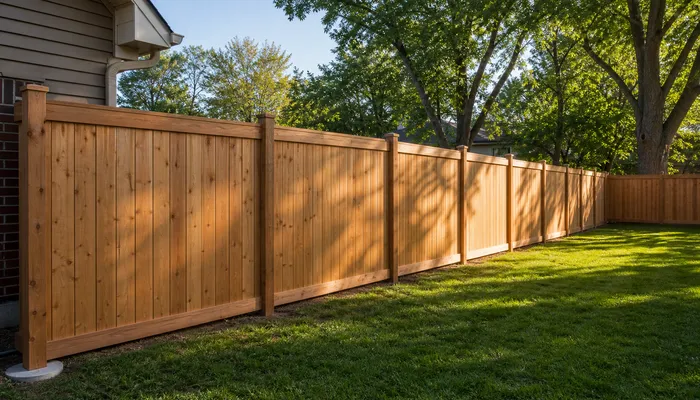
Cedar and treated pine privacy fencing remains the most common request in this corridor because it delivers the most visual privacy for the material dollar. Board-on-board and shadowbox styles use more material per foot than a standard stockade, and taller panels require heavier posts and deeper footings. Homeowners reviewing wood privacy fence installation in Wheaton, IL, usually find the real variables are panel style, board thickness and how many gates the layout needs.
Vinyl Fencing
Vinyl costs more up front and considerably less over time. It does not need staining, it resists moisture, and it holds color well. The trade-off is that it is less forgiving of a poor footing, so installation quality matters more than the panel brand. Projects involving vinyl fence installation in Oswego, IL, often come down to choosing between privacy, semi-privacy and picket profiles, plus deciding whether a section needs reinforcement near a driveway or a slope.
Chain Link, Wrought Iron, Aluminum and Steel
Chain link is the practical choice when the goal is a boundary or pet containment rather than privacy, and it is usually the least expensive option per foot. Wrought iron and aluminum deliver visibility with a defined perimeter; aluminum is lighter and lower maintenance, while wrought iron gives a heavier, more traditional look. Steel fencing sits at the top of the durability range and is often specified where long service life matters more than appearance. Each of these choices also shifts the gate hardware conversation, since heavier gates need stronger posts and hinges.
What a Residential Fence Installation Cost Estimate Should Itemize
A trustworthy estimate reads like a scope of work, not a single number. If a proposal gives you one total and a handshake, you have no way to compare it against a competing bid — or to know what happens when the crew hits a root system or an old concrete footing. Ask for these as separate lines:
- Linear footage by fence type, with height noted
- Post spacing, footing depth and concrete specification
- Gate count, gate width and hardware type
- Old fence removal, footing extraction and disposal
- Whether permit preparation, plat of survey or HOA submittals are included
- Site protection, cleanup and final walkthrough
What is excluded matters just as much. Staining or sealing, sprinkler relocation, tree removal and utility locate delays are frequently outside the base scope, and a quote that names its exclusions up front is usually a quote you can trust. If you are weighing repair against replacement, the guide on the signs it is time to replace a fence covers the decision points that usually trigger a new estimate. For how moisture and temperature exposure separate long-lived fences from short-lived ones, see choosing the right material for weather.
Permits, Surveys and HOA Review Before Installation
Across most of this corridor a fence is a permitted improvement, and permits are issued locally rather than through one regional rulebook. Height limits, setback from the property line, corner-lot visibility triangles and the definition of a front yard can change from one municipality to the next — and they change again inside planned subdivisions, where an HOA may layer its own approval process on top of the municipal one.
The practical effect on cost and schedule is straightforward: permit review, a plat of survey to confirm where the line actually sits, and HOA architectural review all take time, and some add cost. A layout built on an assumed property line is the most expensive kind of mistake, because it may have to come down. Homeowners planning residential fence installation in Naperville, IL, should expect the same sequence anywhere in the group: confirm the line, confirm the local limit, get any HOA approval in writing, then schedule the build.
Who You Are Working With
Chicago Fence Builders has spent more than 15 years installing residential and commercial fencing across Chicagoland, and works to what the company calls the True Build-Quality Standard™ — a site assessment first, a written scope second, and installation that treats footings and framing as the parts of the job that decide how the fence performs in year ten. The team is licensed, bonded and insured, and the approach is deliberately unglamorous: confirm the property line, confirm the local rule, then build the layout to the yard that is actually there.
Suburban Lot Layouts, Gates and Access Across the Group
The five communities in this footprint share a suburban character but not identical yards. Aurora, in Kane County, spreads along the Fox River and includes both older tree-heavy lots and newer subdivision lots with tighter side-yard clearances. Downers Grove sits in DuPage County, where mature landscaping and detached garages frequently dictate where a gate can realistically land. Further west, newer lots in Oswego tend to be more open, which often simplifies equipment access but pushes the fence line closer to neighboring boundaries.
Those differences show up in the scoping conversation. On an older, tree-heavy lot along the Fox River, fence installation in Aurora, IL, may involve root cutting and footing relocation that a new subdivision lot never sees. In DuPage County, working with fence contractors in Downers Grove, IL, often means planning around a detached garage, a driveway approach or a rear lot that opens onto a park district greenway.
Scale is part of why the region behaves the way it does. Illinois is the sixth-most populous state in the country, with an estimated 12,692,653 residents in the 2023 American Community Survey, according to the U.S. Census Bureau ACS 5-year estimates, and the Census Reporter profile for Illinois offers a readable breakdown of those state-level figures. The western suburban corridor spanning DuPage, Kane and Kendall counties is a large share of that market, which makes accurate scoping and early scheduling more valuable, not less.
The geographic details are easy to check. OpenStreetMap lists Downers Grove within DuPage County, sitting between I-88 and I-55, which shapes how crews stage equipment on narrow residential streets. Wheaton sits in the same county, Naperville touches both DuPage and Will counties, and Oswego anchors the western edge of the group in Kendall County.
Frequently Asked Questions About Residential Fence Installation Cost
Why do two quotes for the same yard differ so much?
Usually because they are scoping different work. One estimate may assume you will remove the old fence yourself; another may include footing extraction and disposal. Post depth, gate hardware, panel thickness and permit handling are the most common silent variables, and a line-by-line comparison removes most of the mystery.
Does the material matter more than the yard itself?
Both matter, but they show up in different places. Material sets the base cost per foot. The yard sets the labor: slope, access, soil, root systems and how many corners the layout has. A simple yard with an expensive material and a difficult yard with a modest material can land in a similar range.
Are permits and HOA approvals part of the installation cost?
They can be. Permit fees and review timelines are set locally, and many subdivisions add an architectural review step on top. Ask directly whether the estimate covers permit preparation and HOA submittals, and whether a plat of survey is needed to confirm the property line before work starts.
How long does a single-family fence project take?
Most residential installations are measured in days of on-site work rather than weeks, but calendar time is longer once estimate, material ordering, permit review and any HOA approval are included. Weather matters too, since concrete needs appropriate curing conditions and winter ground conditions can push a start date.
What should I have ready before requesting an estimate?
Approximate linear footage, fence height, the material you are leaning toward, whether gates are needed, cleared access to the work area, and roughly where you believe the property line sits. Photos of the yard and the nearest cross street help a contractor prepare a realistic scope before walking the property.
The city guides for Aurora, Downers Grove, Naperville, Oswego and Wheaton each apply the same cost factors to local lot layouts and planning steps, so start with the community closest to you. When you are ready to turn a range into a real number, call Chicago Fence Builders at (773) 312-3051 or request a free on-site estimate and bring your rough measurements along.
Ciudades Relacionadas De Esta Región
- Fence Installation en Aurora, IL
- Wood Privacy Fence para Downers Grove, IL
- ayuda con Vinyl Fence en Naperville, IL
- servicio de Chain Link Fence en Oswego, IL
- Wrought Iron Fence en Wheaton, IL