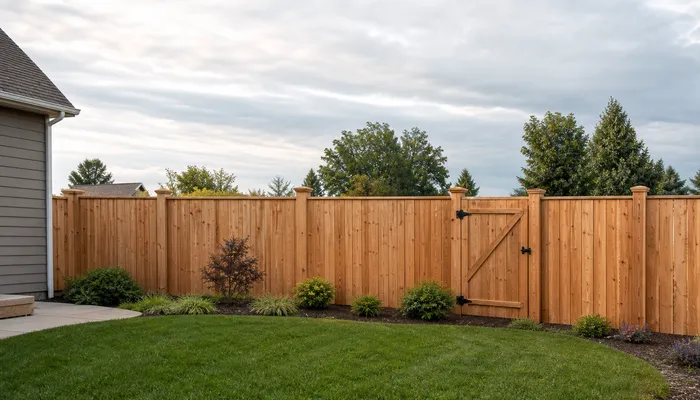
Choosing a fence style that boosts curb appeal is rarely about finding the most photogenic panel at a home show. Across Will County, Illinois, the decision sits where lot size, house architecture, material durability and municipal review meet — and where four distinct seasons quietly test every choice you make. A fence that looks sharp in June still has to look intentional after a February of freeze-thaw cycles. Getting that combination right is what separates a fence that simply marks a property line from one that changes how a house reads from the street.
Bolingbrook, Joliet, Plainfield and Romeoville share a county and a broadly suburban character, but they do not share identical lots, setbacks or permit processes. That is why a fence style that boosts curb appeal on one street can feel out of place a few miles away. This guide walks through how style, material and placement work together across the region, and points you to city-specific detail where it actually matters.
Illinois provides the wider frame. The state sits in the Midwestern United States, stretching from the Chicago metro area in the northeast to river towns along the Mississippi in the west, with a mix of older industrial cities, postwar subdivisions and newer planned neighborhoods. That spread is exactly why fencing looks different from one municipality to the next. Wikipedia’s overview of Illinois is a useful starting point for understanding that geography before you commit to a single look.
What a Fence Style That Boosts Curb Appeal Actually Means
Curb appeal is not a single product. It is a set of relationships: the height of the fence relative to the house, the rhythm of posts and panels, the way a gate lines up with a walkway, and whether the color repeats something already present in the facade, roof or trim. A short picket run in front of a low ranch home, paired with a taller privacy panel at the rear, can look deliberate. The same two elements mismatched can look accidental.
Before comparing materials, it helps to answer three practical questions:
- What are you enclosing? A pool, a dog run, a side yard, a commercial service area and a front garden each call for different heights, gaps and sightlines.
- Who sees the fence, and from where? A rear fence viewed only from a kitchen window can favor privacy. A front or corner-lot fence is read from multiple angles and needs to look finished from all of them.
- How will it age? A style that requires frequent refinishing will lose its crispness faster than one that holds its shape with basic care.
Answer those first, and the material conversation becomes much shorter.
How Illinois Weather Shapes Fence Style Choices in Will County
Will County fencing lives with real seasonal movement. Summer humidity and heat expand wood and stress coatings. Winter delivers repeated freezing and thawing, which pushes at post footings and can open small gaps in any assembly that was not built with movement in mind. Spring rains then test drainage around the base of every post.
That cycle has practical consequences for style:
- Wood offers the warmest look and the easiest repair path, but it will cup, check and gray unless it is sealed and maintained.
- Vinyl holds color and needs very little upkeep, which suits homeowners who want a clean line without annual work.
- Aluminum and steel resist rot entirely and keep narrow profiles, making them strong choices where visibility and openness matter.
- Wrought iron delivers a traditional, decorative look that pairs well with brick and stone facades.
- Chain link is the most economical way to define a large perimeter, and it visually recedes once it is in place.
None of those materials is universally right. The question is which one supports the look you want without creating a maintenance routine you will not keep up with. If you want a deeper comparison of how the three most common options behave over time, our fence material guide for wood, vinyl and chain link covers the trade-offs in more detail.
Will County Communities and Their Fence Style Priorities
The four communities in this group sit close together, but each has its own mix of housing stock, lot width and street character. That mix shapes which styles tend to work best.
Bolingbrook
Bolingbrook is a village in Will County with a blend of established streets and newer subdivisions. Lot sizes vary enough that a six-foot privacy fence at the rear and a shorter decorative run near the front can both make sense on the same street. Because rear yards here often back onto neighboring yards rather than open space, privacy tends to drive the decision. Homeowners comparing options for a backyard or pool enclosure often start with our residential fence installation in Bolingbrook, IL page before settling on a panel style.
Joliet
Joliet is the county seat of Will County and the largest city in this group, with housing that ranges from older river-town blocks to newer construction on the edges. That variety rewards fences with strong architectural character. Joliet’s history as an early Route 66 city shows up in the traditional front-yard look many homeowners still prefer, and wrought iron or aluminum often suits brick and stone facades better than a solid panel. For that reason, many projects here begin with wrought iron fencing for Joliet, IL homes and adjust from there.
Plainfield
Plainfield is a village in Will County that grew quickly, and its newer neighborhoods tend to have wider lots and more uniform streetscapes. In that setting, a consistent, low-maintenance fence reads as intentional rather than decorative. Vinyl is a frequent choice because color and profile stay consistent across a long run, and because it holds a clean line without annual sealing. Homeowners weighing that route can review vinyl fence installation in Plainfield, IL for neighborhood-level detail.
Romeoville
Romeoville sits between Bolingbrook and Joliet near I-55 and I-355, and its mix of residential blocks, commercial frontage and industrial parcels means fencing here is not only a curb-appeal question. Residential lots still favor privacy and clean sightlines, but commercial and light industrial properties often need a perimeter that defines access points and screens service areas. Projects in that category typically begin with commercial and chain link fencing in Romeoville, IL, where height, gates and material are matched to how the site is actually used.
Matching Fence Style to Home Architecture and Lot Layout
A fence does not exist on its own; it frames whatever sits behind it. Three layout details do most of the work:
- Frontage width. A narrow frontage benefits from a lower, more open fence that does not compress the house. A wide frontage can carry a taller, more substantial run without overwhelming the facade.
- Corner lots. Two street-facing sides mean the fence is read from two directions. Consistent height, matched posts and clean terminations at the corner matter more here than anywhere else.
- Grade changes. Sloped yards demand either stepped panels or racked rails. Racked rails follow the slope smoothly; stepped panels create a staircase look that reads as more formal.
Once those are settled, the decision usually narrows to color and detail level. Fences that repeat the trim color of the house tend to look calm and integrated. Fences that contrast deliberately — dark metal against a light facade, for example — read as a design choice instead of an afterthought. Neither approach is wrong, but the second requires more confidence to pull off.
Planning, Permits and Locate Requests Before You Install
Fence rules are set at the municipal level in Illinois, so requirements that apply in one village do not automatically carry over to the next. The style you choose should be checked against the specific rules of your own community before materials are ordered.
Bolingbrook is a useful example of how specific those rules can get. The Village of Bolingbrook Building Division handles building permits and requires them before covered construction work begins, and residential fence permits are treated as an exception to the Village’s usual inspection requirement. A fence placed within a drainage easement requires a separate permit from the building commissioner, and that application must describe the fence location, its purpose, who will perform the work and for whom. Because utility companies may need to remove or disturb improvements placed inside an easement, it is worth confirming easement boundaries before finalizing a layout.
Underground conditions matter as much as paperwork. Any digging should be preceded by a current JULIE / Illinois 811 locate request so that gas, electric, water, sewer and communications lines are marked before posts go in. Skipping that step is one of the few fencing mistakes that can turn an afternoon project into a serious safety issue.
If cost is already part of your planning, our residential fence installation cost guide breaks down which variables typically move a residential estimate up or down.
Frequently Asked Questions About Fence Style in Will County
Does the same fence style that boosts curb appeal work in every Will County community?
Not always. Lot width, frontage, house architecture and local review standards vary between Bolingbrook, Joliet, Plainfield and Romeoville. A style that suits a wider lot in one village may feel heavy on a narrower one nearby. Start from your own property’s proportions, then confirm local requirements.
Is wood or vinyl better for curb appeal?
Wood reads warmer and can be stained to match almost any facade, but it needs periodic sealing to stay crisp. Vinyl holds its color with minimal upkeep and produces a very consistent line across a long run. Either can look excellent; the deciding factor is usually how much maintenance you intend to do.
Do I need a permit for a fence in Will County?
Permit requirements are set by each municipality, not by the county as a whole. In Bolingbrook, for example, the Building Division issues permits and residential fence permits are exempt from the Village’s standard inspection process. Always confirm the current requirement with your own village or city before installation.
How tall should a front-yard fence be?
Front-yard fences generally read better when they are lower than rear privacy fences, because a tall panel across a frontage visually shortens the house. Specific height limits are set locally, so check your municipality’s rules rather than assuming a number carries over from a neighboring town.
What fence style works best on a corner lot?
Corner lots reward consistency. Because two sides face public streets, matching height, matched post spacing and clean corner terminations matter more than decorative detail. Aluminum, wrought iron and low-profile wood designs tend to handle that dual view well.
Next Steps for Your Will County Property
Style decisions get easier once you look at your own lot rather than a catalog. Walk the property line, note where sightlines actually matter, and check how the house reads from the street at both ends of the day. From there, the choice between a solid privacy run, an open metal fence and a low decorative frontage usually becomes obvious.
If you would like that assessment done on site, the team at Chicago Fence Builders works across Will County and can review layout, materials, gates and permit considerations for your specific address. The city pages linked above — Bolingbrook, Joliet, Plainfield and Romeoville — are the fastest way to see how projects are handled in your part of the county, and each one includes local detail worth reviewing before you request an estimate.